GO BACK
Mood Tracking for Anxiety, Depression and Stress: What to Track for Each
For anxiety, track how anxious you feel (0 to 10), physical symptoms, triggers and anything you avoided. For
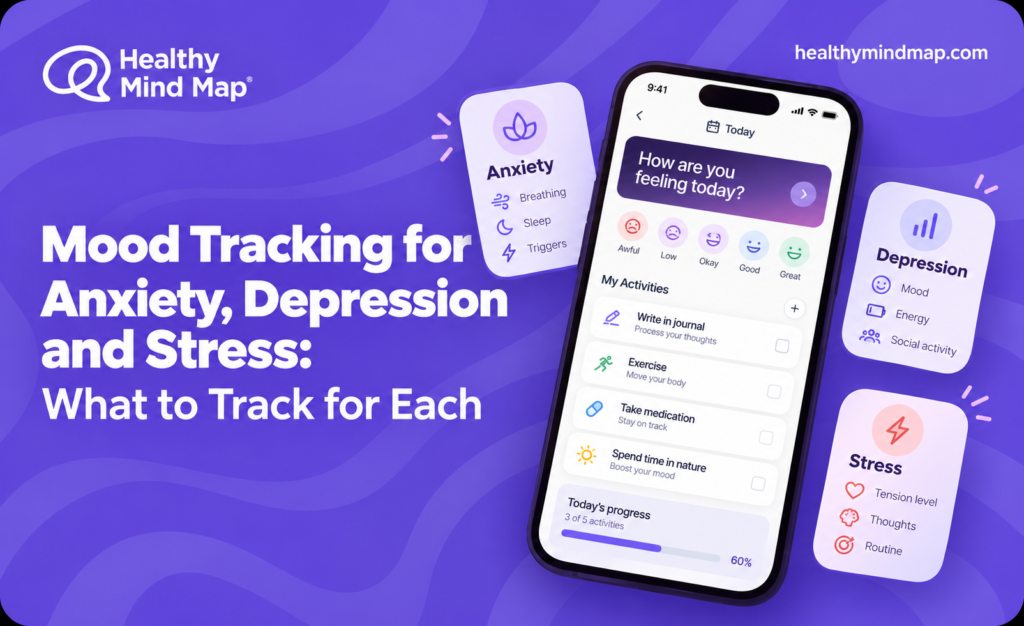


For anxiety, track how anxious you feel (0 to 10), physical symptoms, triggers and anything you avoided. For depression, track your overall mood, energy, interest in things you usually enjoy, sleep and what you managed to do each day. For stress, track your stress level, its main sources, physical signs and what helped you recover. All three benefit from logging sleep and a short daily note.
A basic mood rating is a good start, but it won’t tell you much on its own. “3 out of 5” could mean worried, flat, or overloaded, and each needs a different response. Tracking a few extra details that fit what you’re dealing with makes your record far more useful, both for you and for anyone supporting you.
This guide explains what to track for anxiety, depression and stress, what patterns to look for, and how to keep tracking simple.
Catch anxiety triggers as they happen. Log a moment in seconds and see your patterns.
Anxiety, depression and stress can feel similar from the inside, and they often overlap. But they tend to show up in different ways:
Tracking the right signs for each helps you see what’s really going on and what helps. If you’re new to tracking, start with the basics in our guide on how to track your mood, then add the details below.
| Anxiety | Depression | Stress | |
|---|---|---|---|
| Core rating | Anxiety level (0 to 10) | Overall mood (1 to 5) | Stress level (0 to 10) |
| Also track | Physical symptoms, worries, avoidance | Energy, interest, sleep, appetite | Main stressor, physical signs |
| Context | Triggers, caffeine, sleep | Activities done, social contact | Workload, breaks, recovery time |
| Pattern to watch | Which situations spike anxiety | Whether low days are becoming more frequent | Whether stress builds without recovery |
Anxiety can feel unpredictable, but tracking often shows that it follows patterns. The goal is to learn when it rises, what it feels like in your body, and what brings it back down.
After two to four weeks, look for:
In Healthy Mind Map, you can log a “Moment” as soon as anxiety spikes, so you capture the trigger while it’s fresh rather than trying to remember it at the end of the day. Our anxiety tracking app also includes guided breathing exercises you can use in the moment and then note whether they helped.
With depression, the challenge is often that days blur together and it’s hard to tell whether things are getting better or worse. Tracking gives you a clearer picture over weeks, not just how you feel today.
Tracking activities matters here. A common approach in therapy for depression, called behavioral activation, focuses on gradually adding meaningful or enjoyable activities and noticing how they affect mood. Your record can show which small actions tend to lift your rating.
Healthy Mind Map also includes a Depression Assessment, a short questionnaire you can complete over time to see how your answers change. It’s a screening tool, not a diagnosis, but the results are useful to share with a doctor or therapist.
See how you’re really doing over weeks, not just today. Track mood, energy and activities for free.
Stress isn’t always a problem. Short bursts can help you focus. It becomes harder when it builds day after day without a chance to recover.
Spotting these patterns early makes it easier to plan breaks, set boundaries or ask for support before stress turns into burnout. If you’re comparing tools, our roundup of stress management apps covers options that combine tracking with relaxation exercises.
Many people experience more than one of these at the same time. You don’t need three separate logs. Use one core check-in and add only the extras that fit you:
| Every check-in | Add if anxiety is a concern | Add if depression is a concern | Add if stress is a concern |
|---|---|---|---|
| Mood (1 to 5), emotion word, sleep, one-line note | Anxiety level, physical symptoms, trigger | Energy, enjoyment, activities done | Stress level, main stressor, recovery |
Keep it short. A check-in that takes more than two minutes is hard to keep up, and consistency matters more than detail.
Once a week, spend five minutes looking back over your entries and ask:
Then choose one small thing to try in the coming week, like an earlier bedtime, a daily walk or a planned break, and see whether your ratings change. The Week in Review in Healthy Mind Map pulls your recent check-ins together so this takes minutes rather than scrolling back through every entry.
If you’re working with a professional, your record can make appointments more focused. Instead of summarizing a month from memory, you can show what happened.
In Healthy Mind Map, you can export your mood reports as a PNG image or PDF and share them through any app on your phone. You choose what to share and with whom. Over time, this record also helps you and your therapist see whether therapy is working, based on weeks of data rather than one session.
Tracking should help, not become one more thing to worry about:
Most problems with tracking come down to a handful of mood tracking mistakes, and they’re easy to fix once you know them.
One simple check-in for anxiety, low mood and stress. Start tracking free today.
Can Mood Tracking Help With Anxiety?
Mood tracking can help you understand your anxiety by showing what triggers it, when it peaks and what helps bring it down. It doesn’t replace professional care, but many people find it makes anxiety feel more predictable and easier to manage.
What Should I Track if I Think I’m Depressed?
Track your overall mood, energy, sleep, appetite, whether you enjoyed anything, and what you did each day. If low mood, low energy or loss of interest lasts for two weeks or more, talk to a doctor or mental health professional.
How Is Stress Different From Anxiety?
Stress is usually a response to an outside pressure, like a deadline or a difficult situation, and it often eases once that pressure passes. Anxiety can continue even when there’s no clear stressor, and it often involves ongoing worry or fear.
How Often Should I Track My Anxiety or Mood?
Once or twice a day is enough for most people. For anxiety, you can also log moments as they happen, which helps you capture triggers more accurately.
Can a Mood Tracker Diagnose Depression or Anxiety?
No. Mood trackers and self-assessments can show patterns and changes over time, but only a qualified professional can make a diagnosis. Your tracking data can be a helpful starting point for that conversation.



Join Healthy Mind Map today. Your first step toward understanding your mental health.