GO BACK
Calm vs. Healthy Mind Map: Which Fits Your Mental Health Goals? (2026)
The mental wellness app market continues to grow rapidly, giving users more choices than ever before. Among the
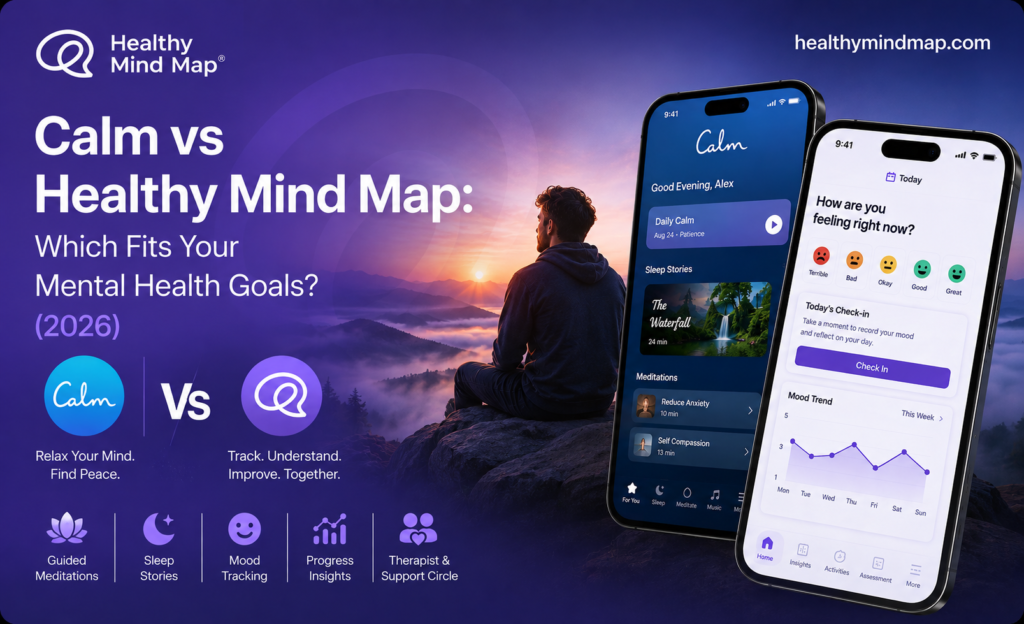


The mental wellness app market continues to grow rapidly, giving users more choices than ever before. Among the many platforms available today, Calm and Healthy Mind Map serve very different purposes, even though both support emotional well-being.
If you are trying to achieve specific mental health goals, improve self-awareness, or build healthier habits in 2026, understanding these differences is important. The right platform depends largely on what you hope to achieve.
Are you focused on relaxation and mindfulness? Are you trying to understand emotional patterns? Are you working toward specific mental wellness goals or creating long-term emotional health goals?
The answers to these questions can help determine which platform aligns best with your personal objectives. In this guide, we’ll compare Calm and Healthy Mind Map through the lens of goal-setting, emotional awareness, and long-term mental wellness.
Before comparing any wellness platform, it is important to understand your own mental health goals. Many people download wellness apps without defining what success actually looks like. They want to feel better, reduce stress, or improve their mindset, but they never clarify their objectives.
This is where questions like what is a mental goal become important. A mental goal is an intentional target related to emotional well-being, mindset, resilience, or personal growth.
Examples might include:
These are all examples of goals for mental health that can guide your decision when choosing a wellness platform.
Calm is primarily designed around relaxation, mindfulness, meditation, and sleep improvement. The platform offers guided meditations, breathing exercises, sleep stories, calming music, and mindfulness programs. For individuals whose primary mental health goals involve reducing stress or improving sleep quality, Calm can be a valuable resource.
Many users choose Calm as part of their mental health resolutions because it provides immediate tools that help create moments of relaxation throughout the day. For example, if one of your emotional goals is to feel less overwhelmed after work, Calm’s guided breathing exercises may support that objective.
Similarly, people setting short term health goals related to stress reduction often find meditation-based platforms helpful because they provide quick, actionable exercises. However, Calm focuses primarily on relaxation rather than long-term emotional pattern analysis.
Healthy Mind Map approaches wellness from a different perspective. Instead of focusing primarily on meditation content, Healthy Mind Map is built around emotional awareness, reflection, habit tracking, and personal insight.
The platform helps users observe emotional trends, identify behavioral patterns, and connect daily habits with emotional outcomes. This makes it especially useful for individuals pursuing measurable mental wellness goals.
If your goals for emotional health include understanding why certain situations affect your mood, recognizing recurring emotional triggers, or building self-awareness, Healthy Mind Map offers a structured framework to support those objectives.
Many people create mental health goals examples such as:
These are areas where Healthy Mind Map excels. Rather than providing a momentary sense of calm, it focuses on helping users build long-term awareness.
Not all emotional goals are the same. Someone whose primary goal is immediate relaxation may find Calm more suitable. However, individuals seeking deeper understanding of their emotional patterns may benefit more from Healthy Mind Map.
For example, if your emotional health goals include understanding mood fluctuations, tracking emotional changes over time, or identifying behavior patterns, Healthy Mind Map provides tools designed specifically for that purpose.
This distinction matters because successful goals for mental health often require different types of support. Relaxation and awareness are both valuable, but they solve different problems.
Let’s look at a few practical mental health goals examples and which platform may align better.
Both platforms can help.
Calm supports stress reduction through meditation and relaxation exercises.
Healthy Mind Map helps users identify the causes of stress through reflection and tracking.
Healthy Mind Map has a stronger focus here.
Many goals for emotional health involve understanding emotional patterns, which is a core part of the platform.
Healthy Mind Map supports habit awareness and behavioral tracking.
This makes it particularly useful for individuals pursuing mental wellness goals connected to lifestyle changes.
Calm’s sleep-focused content gives it an advantage for this specific objective.
This demonstrates why defining your mental health goals before choosing an app is so important.
Many people underestimate the importance of structured goal-setting. Questions like what is a mental goal are becoming increasingly common because emotional growth often feels difficult to measure.
Creating specific objectives can help.
Examples include:
These mental health goals examples create measurable progress. Similarly, individuals working on short term goals for depression often benefit from small, achievable milestones rather than focusing only on large outcomes.
The same principle applies to goals and objectives for depression. Smaller goals tend to feel more realistic and sustainable.
Many people focus exclusively on big goals in life while overlooking the small habits that support them. Improved emotional well-being rarely happens through a single breakthrough moment. Instead, lasting progress comes from daily actions aligned with clear mental health goals.
Whether your objective is improved resilience, emotional awareness, or stronger self-reflection, consistency matters. Healthy Mind Map helps users connect daily actions to larger mental wellness goals, making it easier to see progress over time. This relationship between daily habits and long-term growth is one reason many individuals choose structured wellness platforms.
1. What is a mental goal?
A mental goal is a specific objective related to emotional well-being, mindset, self-awareness, stress management, or personal growth.
2. What are some mental health goals examples?
Common mental health goals examples include reducing stress, improving emotional awareness, building healthier habits, and strengthening resilience.
3. Are emotional health goals different from mental health goals?
They overlap significantly. Emotional health goals often focus specifically on emotional regulation, awareness, and coping skills, while mental health goals can include broader wellness objectives.
4. Can Healthy Mind Map support short term goals for depression?
Healthy Mind Map can support self-awareness and emotional tracking, which may help individuals monitor progress toward short term goals for depression. It is not a replacement for professional treatment.
5. Why are goals for emotional health important?
Goals for emotional health provide direction, create accountability, and help individuals measure progress in their wellness journey.
Choosing between Calm and Healthy Mind Map depends largely on your personal mental health goals. If your primary focus is meditation, relaxation, and sleep improvement, Calm may be a strong fit.
If your mental wellness goals involve emotional awareness, pattern recognition, habit tracking, and self-reflection, Healthy Mind Map offers a structured approach designed around those objectives.
The most important step is not choosing the perfect app. It is understanding your goals for mental health, defining your emotional goals, and consistently taking action toward them. Because lasting progress rarely comes from one big decision. It comes from small daily actions that support the big goals in life that matter most.



Join Healthy Mind Map today. Your first step toward understanding your mental health.