


Mental Health Tracking for Therapists
Most of a client’s mental health work happens outside the room. Healthy Mind Map gives you visibility into that gap, mood, habits, and assessment results your clients choose to share, so you walk into each session with real context instead of relying on recall from a week ago.

What is a Mental Health App for Therapists?
A mental health app for therapists is a tool that gives clinicians visibility into a client’s mood, habits, and progress between sessions, based only on what the client chooses to share. Healthy Mind Map isn’t practice management software or an EHR, and it doesn’t diagnose or replace clinical judgment. It’s a way to reduce recency bias and bring more concrete detail into sessions your clients are already tracking on their own through our therapy tracking app.
Client Tracking
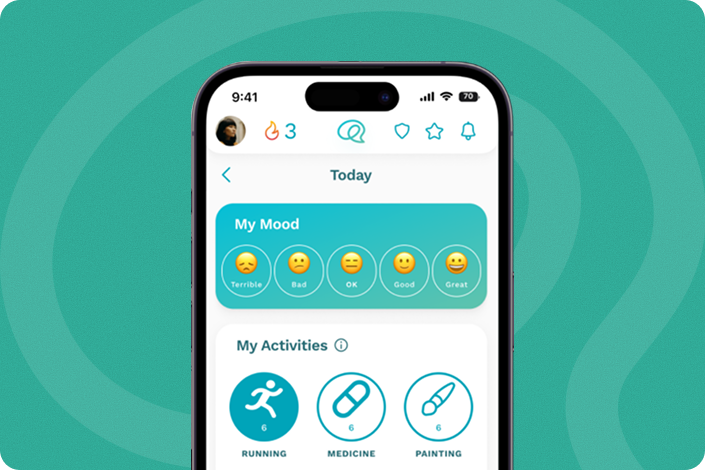
Clients log their mood and daily activities on their own time, sleep, routines, stress, self-care, building a running record without any extra work on your part. You’re not asking them to remember the week; they’ve already written it down.
- Clients log mood and daily activity independently
- No manual intake or check-in forms required from you
- Entries build into a continuous client-side record
Progress Insights
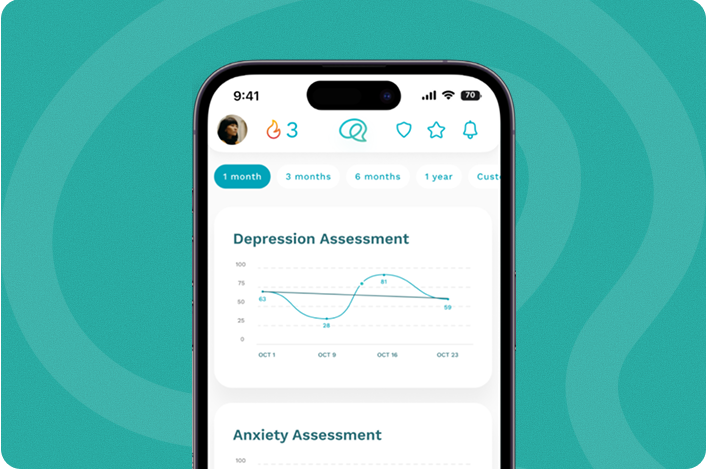
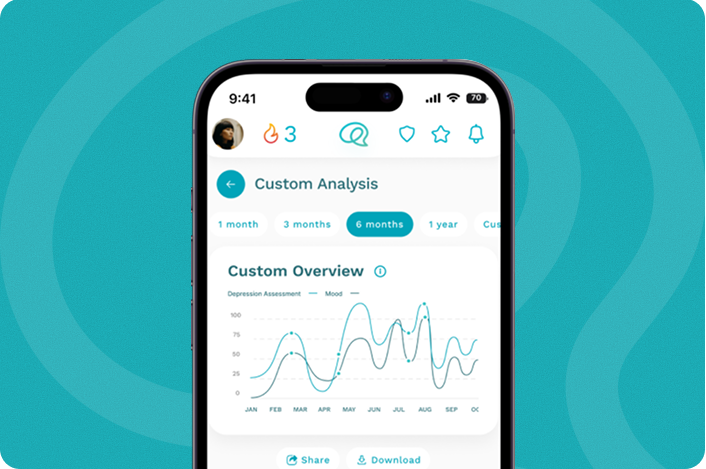
Clients can complete structured assessments on their own schedule, and results are tracked over time rather than as a single score. When shared with you, these results show trends, not just where a client is today, but the direction they’ve been moving.
- Standardized assessments completed on the client’s schedule
- Results tracked as trends, not isolated scores
- A clearer sense of trajectory between visits
Between-Session Context
Instead of starting each session by reconstructing the week, you can review what a client has logged since you last met, mood shifts, activity changes, or a completed assessment, and use that as a starting point for the conversation.
- See a summary of what’s happened since the last session
- Reduce time spent on recall at the start of each visit
- Use logged entries as concrete discussion points
Controlled Sharing
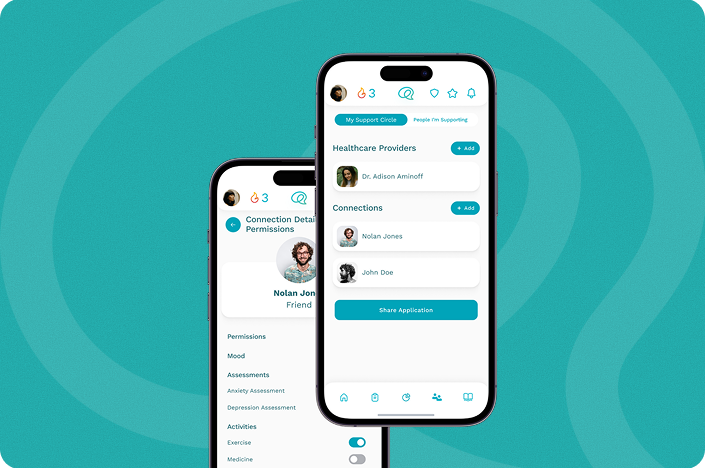
Clients decide exactly what you can see. They might share mood trends but not personal notes, or an assessment result but not daily entries. You get a clinician-facing view of whatever they’ve chosen to make visible, nothing more.
- Clients control what’s shared with you, entry by entry
- Access updates or changes if a client adjusts sharing
- No access to anything a client hasn’t explicitly shared
Better-Informed Sessions
Between visits, clients also have access to guided exercises and grounding tools they can use on their own. When that work shows up in their tracked entries, it gives you more to build on together, and makes sessions feel like a continuation rather than a restart.
- Clients can practice tools between sessions on their own
- That work shows up as part of their shared tracking
- Sessions build on real activity, not just verbal recall
FAQ
Frequently Asked Questions
Common questions about self improvement tracking and how it fits with Healthy Mind Map. See our full FAQ page for more.
No. Healthy Mind Map is a client tracking and sharing tool, not a scheduling, billing, or clinical documentation system. It's meant to sit alongside your existing tools, not replace them.
Yes, if the client chooses to share it. You can use their shared mood and progress entries as context for your sessions, alongside your own clinical judgment.
Healthy Mind Map provides a Business Associate Agreement for providers who need one on file. Review our Terms & Conditions and Business Associate Agreement for details relevant to your practice.
Healthy Mind Map is designed to sit alongside how you already work, whether that's CBT, DBT, trauma-informed care, or a general coaching approach. It provides tracking and context, not a treatment protocol.
Yes. Clients track through the Healthy Mind Map app on their own, the same tool described on our Therapy Tracking App page, and then choose to add you to their support circle.
No. Assessments are self-administered by the client and shared at their discretion. They're a source of context, not a clinical diagnosis, and don't replace your own evaluation.

Ready to Start Feeling More in Control?
Join Healthy Mind Map today. Your first step toward understanding your mental health.
