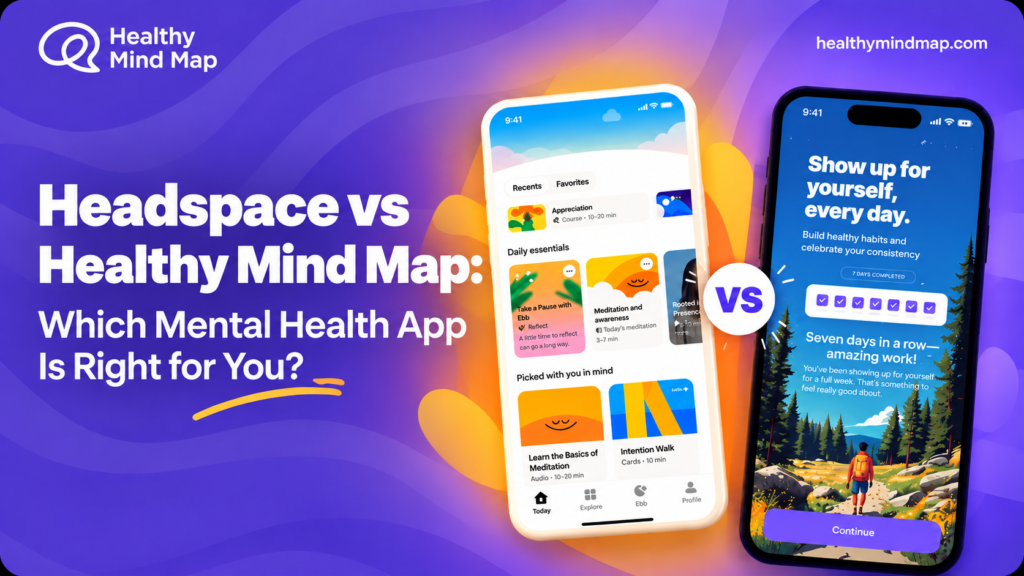
Headspace vs Healthy Mind Map: Which Mental Health App Is Right for You?
Headspace and Healthy Mind Map both support mental health, but they solve different problems. Headspace is a meditation
April 22, 2026 06:16 PM
Headspace and Healthy Mind Map both support mental health, but they solve different problems. Headspace is a meditation and mindfulness app, best known for guided meditations, sleep content, and breathing exercises. Healthy Mind Map is a mood and mental health tracking app that records your daily mood, activities, and assessment scores, then turns them into trends you can share with your therapist. Choose Headspace if you want to build a calming practice. Choose Healthy Mind Map if you want to understand your patterns and track progress over time. Many people use both: one to calm the mind, the other to measure what changes.
These are two very different apps serving two different purposes. This comparison breaks down exactly what each offers and which one is the better fit for your goals in 2026.
Key Features Compared
Before diving deep, here is what each app brings to the table across the features that matter most for mental health support.
Headspace focuses on:
Guided meditation library (500+ meditations)
Sleep stories and sleep sounds
Mindful movement and yoga
Breathing exercises
AI companion (Ebb) for personalized recommendations
Basic self-care tracker
CBT technique exercises
Healthy Mind Map focuses on:
Daily mood check-ins and emotional tracking
Industry-standard mental health assessments
Custom activity and habit tracking
Biometric data integration (Apple Health & Google Fit)
Trusted Support Circle (share progress with family, friends, or therapist)
Analytics and trend reports showing what is and is not working
Headspace has built its reputation on one thing: making meditation approachable and consistent. For users who have never meditated before, Headspace removes the intimidation factor with structured beginner courses, gentle animations, and a calm interface that guides you step by step.
Where Headspace shines:
Meditation content depth. With over 500 guided meditations covering stress, focus, sleep, relationships, and more, Headspace offers one of the largest meditation libraries available. Daily content updates keep the experience feeling fresh and varied.
Sleep support. Headspace’s sleep tools including Sleep Stories, sleep sounds, and wind-down routines are among the most polished in the wellness app space. For users whose primary struggle is falling asleep or managing nighttime anxiety, this is a genuine strength.
Beginner accessibility. The app’s “Basics” courses walk new users through meditation fundamentals in a structured, non-overwhelming way. It is one of the most beginner-friendly mental health apps available.
AI companion Ebb. Headspace’s AI companion provides personalized meditation recommendations and light reflective prompts to help users stay consistent with their practice.
Mindful movement. Headspace includes yoga sessions and mindful movement exercises that connect physical activity with mental well-being a feature not common in competing apps.
Where Headspace falls short:
Headspace is primarily a passive consumption experience. You listen, follow along, and feel calmer in the moment. But the app offers limited ability to track real mental health progress over time, connect meaningfully with a therapist, or understand the deeper patterns driving your emotional state. It tells you to breathe it does not help you understand why you are struggling to in the first place.
Healthy Mind Map: What It Does Well
Healthy Mind Map was designed with a fundamentally different philosophy: mental health support should not just feel good in the moment it should create measurable, lasting change.
Where Healthy Mind Map shines:
Outcome-driven tracking. Healthy Mind Map’s daily mood check-ins, weekly assessments, and activity logs build into rich trend data over time. Instead of wondering whether you are getting better, you can actually see it in clear, visual analytics that show what is working and what needs attention.
Clinically grounded assessments. The app uses industry-standard mental health assessments, not just informal mood sliders. This gives users and their therapists a clinically meaningful picture of progress, not just a general sense of feeling “okay” or “not okay.”
Therapist integration. Healthy Mind Map is one of the very few mental health apps designed to bridge the gap between sessions. Therapists can access client-shared data through a dedicated provider portal reducing recency bias, improving session targeting, and making clinical care more effective without adding administrative burden.
Trusted Support Circle. Users can selectively invite friends, family members, or a therapist to view their progress. You remain in full control of what is shared and with whom. This creates accountability and connection without pressure something no meditation app offers.
Biometric integration. By connecting with Apple Health and Google Fit, Healthy Mind Map pulls in data on sleep, movement, and other physical health metrics, revealing how lifestyle factors influence emotional well-being in ways most apps miss entirely.
Privacy-first design. Your data is fully encrypted. Healthy Mind Map does not sell your personal or emotional data ever. You control everything.
Resource library. For those who want guided tools, Healthy Mind Map also includes a curated library of breathing exercises, grounding techniques, meditations, and CBT-based exercises designed by licensed clinicians so it covers the mindfulness angle too.
Where Healthy Mind Map differs from Headspace:
Healthy Mind Map requires more active engagement than Headspace. Rather than passively listening to a sleep story, users check in, log activities, and reflect on patterns. For people committed to genuine healing and progress, this active engagement is exactly what makes the difference.
Side-by-Side Comparison Table
Feature
Headspace
Healthy Mind Map
Primary focus
Meditation & mindfulness
Mental health tracking & outcomes
Daily mood tracking
Basic self-care tracker
Comprehensive daily check-ins
Clinical assessments
No
Yes, industry-standard
Activity & habit tracking
No
Yes, fully customizable
Biometric integration
No
Yes, Apple Health & Google Fit
Therapist portal
No
Yes, dedicated provider view
Support circle / sharing
No
Yes, selective sharing
Analytics & trend reports
No
Yes, detailed visual trends
CBT-based tools
Basic exercises
Full resource library
Guided meditation
Extensive (500+)
Yes, curated library
Sleep content
Extensive
Via wellness resources
AI companion
Yes (Ebb)
No
Mindful movement / yoga
Yes
No
Data privacy
Data may be linked to identity
Fully encrypted, never sold
Free trial
7–14 days
7 days
Pricing
$12.99/month or $69.99/year
Subscription after free trial
Available on
iOS, Android, Mac, Apple Watch
iOS, Android
Best for
Relaxation & meditation habits
Progress tracking & therapy support
Pricing Compared
Headspace:
Monthly plan: $12.99/month
Annual plan: $69.99/year
Family plan: $99.99/year (up to 6 members)
Student plan: Discounted (85% off for verified students)
Free trial: 7 days (monthly) or 14 days (annual)
Healthy Mind Map:
Free 7-day trial
Subscription required after trial
Available on iOS and Android
For users who want a straightforward meditation habit, Headspace’s annual plan offers reasonable value. For users who want a tool that actively supports therapy, tracks real progress, and connects their support network, Healthy Mind Map delivers substantially more value for the investment.
Who Should Use Headspace?
Headspace is a strong fit if:
You are brand new to meditation and want a guided, structured introduction
Your primary goal is better sleep or reducing in-the-moment stress
You want a passive, low-effort wellness habit to layer into your routine
You enjoy audio-led experiences like Sleep Stories and soundscapes
You are not currently working with a therapist and not looking to track clinical progress
Who Should Use Healthy Mind Map?
Healthy Mind Map is the better choice if:
You want to genuinely track and understand your mental health over time not just feel better in the moment
You are in therapy and want to bridge the gap between sessions with real data
You want your therapist, a family member, or a trusted friend to be able to see your progress (on your terms)
You want to understand how your daily habits, sleep, exercise, self-care connect to your emotional state
You have experienced anxiety, depression, or stress and want a tool that creates measurable, lasting change rather than temporary calm
Data privacy is a priority for you
Headspace vs Healthy Mind Map: The Verdict
Both Headspace and Healthy Mind Map are well-built, legitimate mental health apps but they are designed for fundamentally different goals.
Choose Headspace if your mental health goal is building a consistent relaxation or meditation habit. It is polished, accessible, and excellent at what it does. If you want a calmer morning or a better night’s sleep, Headspace delivers.
Choose Healthy Mind Map if your mental health goal is actual progress. Not just feeling calmer for twenty minutes, but understanding what is driving your emotional patterns, tracking whether things are genuinely improving, staying connected with your therapist between sessions, and building a real picture of your healing journey over time.
Mental health is not a passive experience. For the millions of people navigating anxiety, stress, or emotional struggles alongside therapy or on their own, having a tool that creates visibility, accountability, and genuine insight is not a luxury it is the difference between treading water and moving forward.
Track how you feel, spot your patterns, and share progress with your therapist.
It depends on your goal. Headspace is better for meditation and relaxation. Healthy Mind Map is better for tracking mental health progress, working alongside a therapist, and building measurable outcomes over time.
Can I use both Headspace and Healthy Mind Map together?
Yes. Many users find value in combining a meditation app like Headspace for mindfulness practice with Healthy Mind Map for progress tracking and therapist communication. The two serve different purposes and can complement each other well.
Does Headspace have mood tracking?
Headspace includes a basic self-care tracker, but it does not offer comprehensive mood tracking, clinical assessments, or the kind of trend analytics that Healthy Mind Map provides.
Does Healthy Mind Map have meditation?
Yes. Healthy Mind Map includes a curated wellness resource library with guided meditations, breathing exercises, and grounding tools curated by licensed clinicians — alongside its core tracking and assessment features.
Is Healthy Mind Map good for therapy?
Yes — it is one of the very few mental health apps with a dedicated therapist portal. Clients can share selected progress data with their provider, making sessions more targeted and effective.
How much does Headspace cost in 2026?
Headspace costs $12.99 per month or $69.99 per year, with a family plan at $99.99 per year for up to six members.
Is Healthy Mind Map free?
Healthy Mind Map offers a free 7-day trial, after which a subscription is required to continue using the app.