


Mental Health App for Tracking Your Progress
Healthy Mind Map is a mental health app built around one idea: your progress is easier to see when it’s actually recorded. You log your mood, activities, and assessments, and the app turns those entries into a clear picture of how you’re doing over time. It works whether you’re on your own or working with a therapist.

What Is a Mental Health App?
A mental health app is a tool for recording and reviewing information about your emotional wellbeing, mood, habits, and progress, so you can understand yourself better over time instead of relying on memory alone. Healthy Mind Map focuses specifically on tracking and reflection: mood check-ins, structured assessments, and progress trends, with the option to share select information with a therapist.
Track Your Mood and Daily Habits
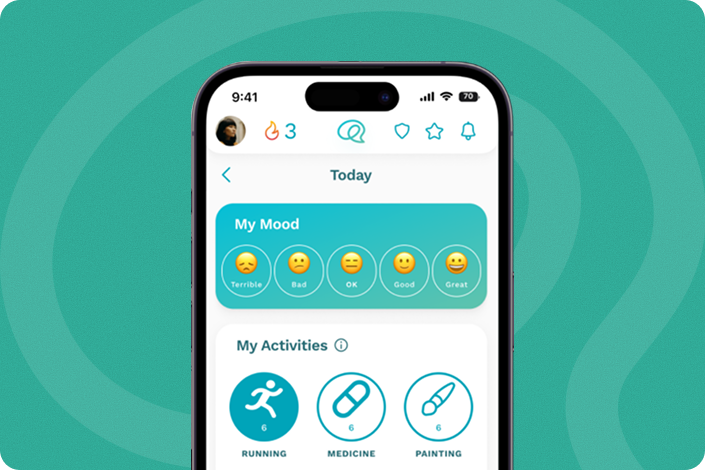
Log your mood alongside the habits and routines that shape your day, sleep, movement, self-care, stress. Each entry takes seconds, and together they build a record you can actually look back on instead of trying to remember how the week went.
- Log mood and daily habits together, not separately
- Add quick notes for context on any entry
- Build a running record instead of relying on memory
Complete Assessments and Understand Your Patterns
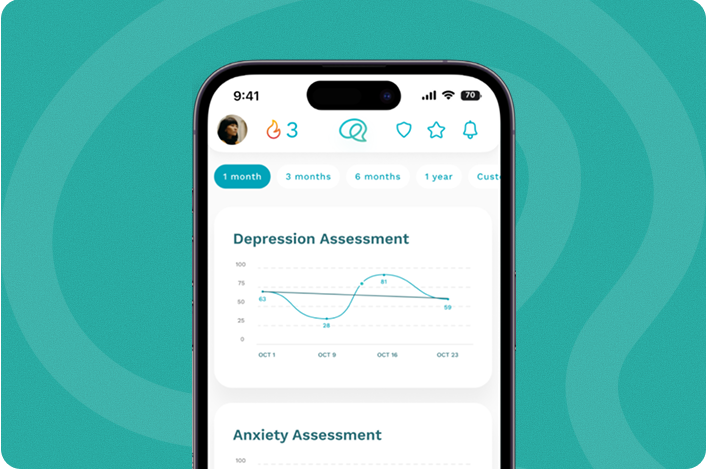
Healthy Mind Map includes structured mental health assessments you can complete on your own schedule, alongside your daily entries. Over time, results and entries together start to show patterns, what tends to line up with harder weeks, what tends to line up with better ones.
- Take assessments whenever you choose
- See results tracked over time, not as a single score
- Spot patterns across mood, habits, and assessment results
Your Support Circle
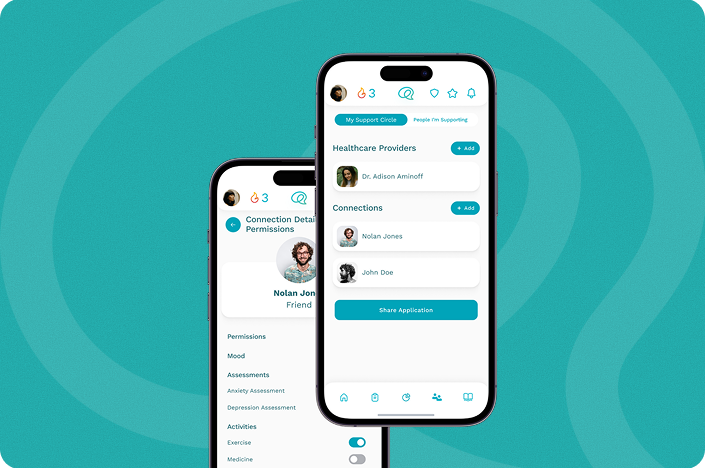
You control who sees what. Healthy Mind Map lets you invite a therapist or a trusted person into a small, private circle, and choose exactly which entries, notes, or results they can see. If you’re working with a therapist specifically, our therapy tracking app page covers session-based sharing in more detail.
- Invite a therapist or trusted person into your circle
- Choose exactly what each person can see
- Change or revoke access at any time
Your space, your community, your choice.
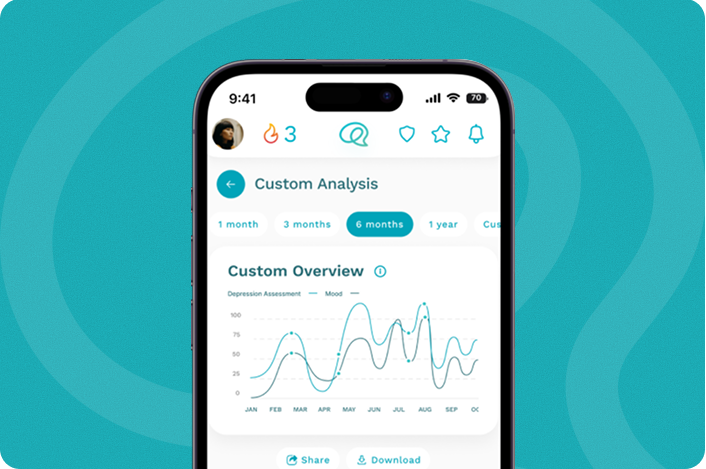
Monitor Progress and Keep a Personal Record
Individual entries are useful on their own, but the real value shows up over weeks and months. Healthy Mind Map turns your tracked data into simple trend views, so you can see whether things are improving, holding steady, or shifting, and keep a personal record you can return to anytime.
- View progress as trends, not isolated entries
- Keep a personal record you can look back on anytime
- Use trends as talking points, not a diagnosis
These insights make it easier to take steps toward a happier, healthier you.
Access Support Resources Anytime
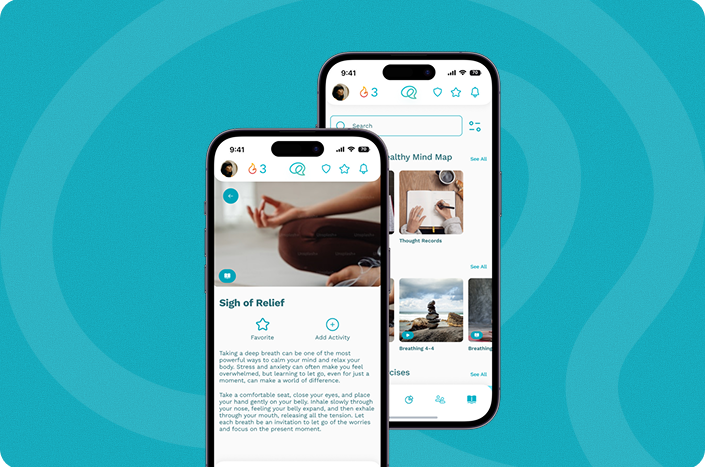
Tracking works alongside a library of short, guided resources, breathing exercises, grounding techniques, and reflection prompts you can use whenever you need them. Explore the full library on our Features page.
- Guided breathing and grounding exercises
- Short reflection prompts for harder days
- Tools available anytime, alongside your tracking
FAQ
Frequently Asked Questions
Common questions about how Healthy Mind Map works and who it's built for. See our full FAQ page for more.
A mental health app like Healthy Mind Map is used to record and review information about your mood, habits, and progress over time, so you have a clearer picture of your mental wellbeing than memory alone can provide.
Our Mood Tracker App focuses specifically on daily mood logging and pattern recognition. This page covers the broader experience, mood, assessments, progress tracking, and support-circle sharing, as one connected tool.
No. Healthy Mind Map is a tracking and support tool, not a substitute for a licensed mental health professional. It's designed to work alongside professional care, not instead of it.
It's built for individuals who want to understand their mental health over time, whether or not they're currently working with a therapist. Therapists can also use client-shared information as a secondary audience, with the client's control over what's shared.
Yes. You decide who's in your support circle and exactly what they can see. Nothing is shared automatically.
No. Tracking can help you notice patterns and changes over time, but it isn't a diagnostic tool. A licensed professional is the right resource for diagnosis or treatment.
There's no fixed rule. Many people check in daily; others track a few times a week. Consistency over time matters more than frequency.

Ready to Start Feeling More in Control?
Join Healthy Mind Map today. Your first step toward understanding your mental health.
