GO BACK
Mood vs Emotion vs Feeling: What Is the Difference?
People often use the words mood, emotion, and feeling as if they mean exactly the same thing. You'll
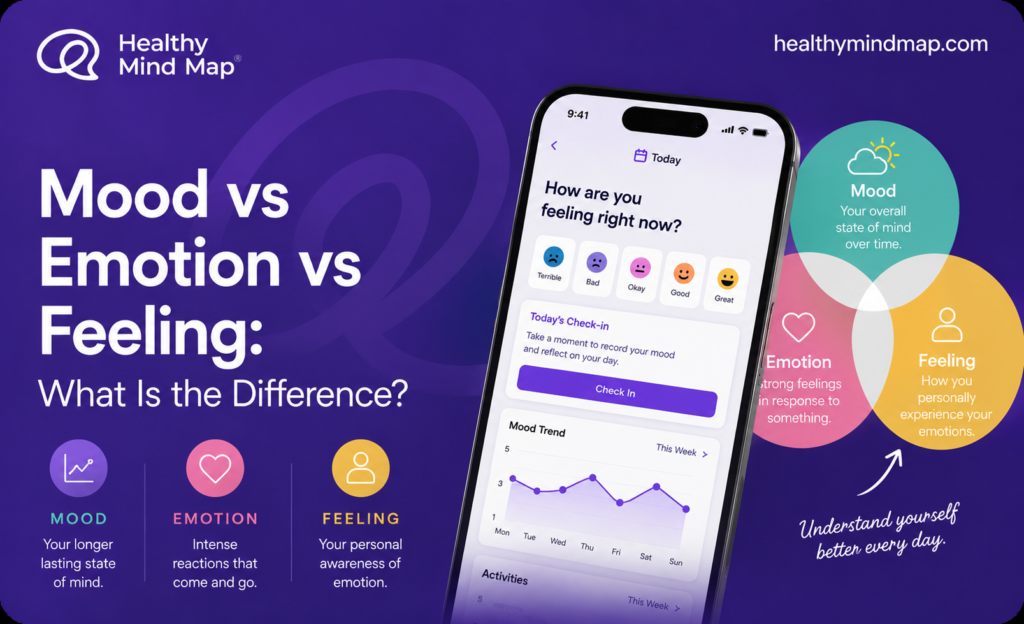


People often use the words mood, emotion, and feeling as if they mean exactly the same thing. You’ll hear someone say, “I’m in a bad mood,” “I’m feeling anxious,” or “I experienced a strong emotion,” often referring to the same situation.
But are they actually the same? Not quite.
Understanding the difference between mood vs emotions and feelings vs emotions is more than just learning psychological terminology. It can help you recognize your emotional patterns, communicate more clearly, and better understand your mental well-being.
If you’ve ever wondered what is the difference between feelings and emotions, or questioned whether emotions and feelings are the same thing, you’re not alone. These are among the most frequently searched mental health questions online today. Let’s explore how psychologists define moods, emotions, and feelings, and why understanding the difference matters.
One of the most common questions people ask is, “Are emotions and feelings the same thing?” The short answer is no. Although they are closely connected, emotions vs feelings describe different parts of the same experience.
An emotion is your brain and body’s automatic response to an event or situation. It happens quickly and often without conscious thought. A feeling is your personal interpretation of that emotional response. It develops after your brain processes the emotion and gives it meaning.
This is why discussions around feelings versus emotions continue to appear in psychology research. Emotions occur first, while feelings represent your conscious awareness of those emotions. Understanding feeling versus emotion helps explain why two people can experience the same event but describe it differently.
Another common source of confusion involves mood vs emotions. Emotions are usually brief and connected to a specific event. Moods tend to last longer and are often less connected to one particular cause.
For example:
When discussing emotion versus mood, psychologists generally describe emotions as short-lived reactions, while moods are longer-lasting emotional states. Understanding mood versus emotion helps explain why you sometimes wake up feeling positive or irritable without immediately knowing why.
The comparison of mood vs feelings can also be confusing. Feelings are your conscious experience of emotions. Moods provide the emotional background that influences those feelings.
Imagine having a stressful week. Your overall mood may become low or tense. Throughout that week, you might experience individual feelings such as frustration, disappointment, relief, or hope.
Understanding moods and feelings helps explain why several different feelings can exist within the same overall mood. This relationship between mood vs feelings is one reason emotional awareness becomes easier with consistent reflection.
Another important distinction involves the difference between thoughts and feelings. Thoughts are ideas, beliefs, or interpretations created by the mind. Feelings are emotional experiences.
For example:
Although thoughts influence emotions, they are not the same thing. Understanding the difference between thoughts and feelings helps people respond more effectively to emotional situations. Many psychologists encourage separating thoughts versus feelings because doing so improves emotional regulation and self-awareness.
People also ask about sentiment vs emotion. Although these terms overlap, they are not identical. An emotion is usually immediate and personal. Sentiment often refers to a broader attitude or opinion developed over time.
For example:
Understanding sentiment vs emotion helps clarify why emotional experiences can change quickly while overall attitudes remain relatively stable.
Knowing the differences between emotions vs feelings, mood vs emotions, and thoughts versus feelings is not just useful for psychology students. It improves everyday emotional awareness.
When people understand the difference between mood and emotion, they become better at identifying:
Instead of saying, “I’m having a bad day,” they begin asking more specific questions:
These questions create greater emotional clarity.
Recognizing emotional differences becomes much easier when you track them consistently. Using a daily mood tracker app allows individuals to observe emotional changes over time rather than relying on memory.
Through daily mood tracking, users begin noticing patterns between emotions, moods, routines, and daily experiences. For example, a mood tracker app may reveal that poor sleep influences your overall mood, while stressful conversations trigger specific emotions.
Over time, daily mood tracking helps users better distinguish between short-term emotional reactions and longer-lasting mood changes.
Healthy Mind Map is designed to support emotional awareness through structured reflection rather than simply recording moods. Instead of asking only “How do you feel today?”, the platform encourages users to connect emotions with daily habits, activities, and routines.
Through consistent daily mood tracking, the Healthy Mind Map platform helps users identify emotional patterns that may otherwise go unnoticed. As a mood tracker app, it supports long-term self-awareness by helping users understand the relationship between moods, feelings, behaviors, and everyday experiences.
Rather than replacing professional care, Healthy Mind Map provides practical tools that encourage reflection and emotional understanding over time.
Understanding emotions vs feelings, mood vs emotions, and the difference between thoughts and feelings is more than learning new vocabulary. It is about learning how your mind works.
When you understand the difference between an emotion, a feeling, and a mood, you become better equipped to recognize patterns, communicate clearly, and respond thoughtfully instead of reacting automatically.
And with consistent daily mood tracking through tools like Healthy Mind Map, those patterns become even easier to understand. Because emotional awareness doesn’t begin with having all the answers. It begins with learning to ask better questions about how you feel.
The difference between feelings and emotions is that emotions are automatic biological responses, while feelings are your conscious experience and interpretation of those emotions.
No. Although closely connected, emotions and feelings are not the same thing. Emotions occur first, while feelings develop after your brain processes those emotional reactions.
The difference between mood and emotion is that emotions are usually brief and triggered by specific events, while moods last longer and may not have one clear cause.
The difference between thoughts and feelings is that thoughts are mental interpretations, while feelings are emotional experiences. Understanding thoughts versus feelings improves emotional awareness.
Yes. A mood tracker app supports daily mood tracking, helping users recognize long-term patterns involving moods and feelings, emotions, and daily habits.



Join Healthy Mind Map today. Your first step toward understanding your mental health.