GO BACK
Mouth Breathing vs Nose Breathing: Which Is Better for You?
For most people, most of the time, nose breathing is better than mouth breathing. Your nose filters, warms
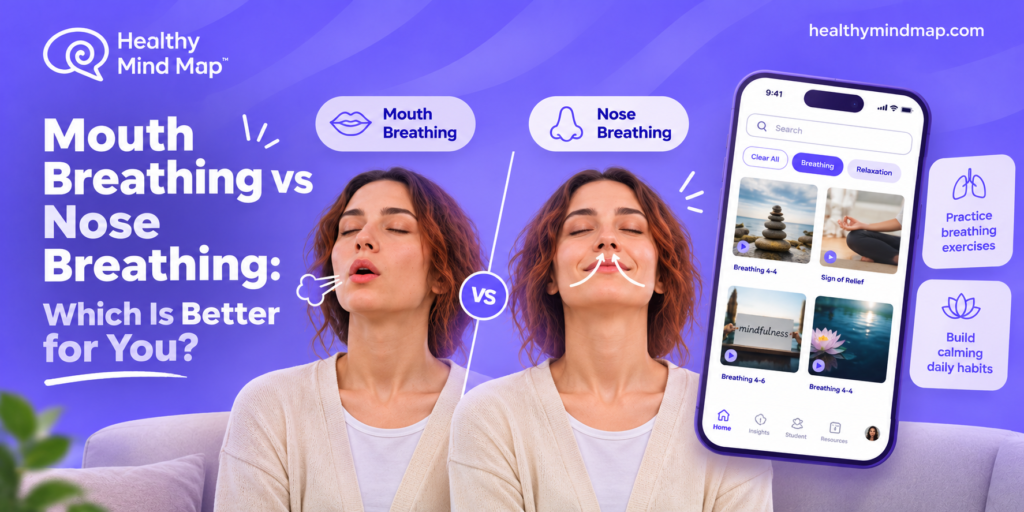

For most people, most of the time, nose breathing is better than mouth breathing. Your nose filters, warms and humidifies the air, and it naturally slows your breathing, which helps your body stay calm. Mouth breathing is useful during hard exercise or when your nose is blocked. But breathing through your mouth all the time is linked to dry mouth, snoring and poorer sleep. If you often catch yourself mouth breathing, slow nasal breathing exercises can help you retrain the habit.
You probably don’t think about how you breathe. Most of us only notice it when something feels off: a racing heart before a big meeting, a dry mouth when you wake up, or the feeling that you can’t get a full breath.
The way you breathe, through your nose or your mouth, affects how calm you feel, how well you sleep and even how clearly you think. Here’s what the difference actually is, how to tell which one you do, and simple ways to switch.
Track your mood, understand your emotions, and build healthier habits with a mood tracking app.
Nose breathing means inhaling and exhaling through your nostrils with your lips closed. Mouth breathing means air goes in and out through your open mouth. Most people switch between the two without noticing, but your body is designed to breathe mainly through the nose.
| Nose Breathing | Mouth Breathing | |
| Air quality | Filters dust and particles | Little filtering |
| Temperature and moisture | Warms and humidifies air | Air stays cold and dry |
| Breathing speed | Naturally slower and deeper | Often faster and shallower |
| Effect on calm | Supports a relaxed state | Often linked to stress or exertion |
| Sleep | Linked to quieter, steadier sleep | Linked to snoring and dry mouth |
| When it’s useful | Rest, daily life, sleep, light exercise | Hard exercise, blocked nose |
Your nose isn’t just an airway. It does several jobs your mouth can’t:
Breathing through your mouth now and then is completely normal. When it becomes your default, though, it can lead to:
It can be. When you feel stressed or anxious, your body’s “fight or flight” response speeds up your breathing, and many people switch to quick, shallow breaths through the mouth. Fast mouth breathing can then make anxiety feel worse, with a racing heart, tight chest or dizziness, which creates a loop.
\Breaking that loop often starts with slowing your breath down. Breathing slowly through your nose sends a signal to your body that you’re safe. If anxious thoughts keep spinning even after you’ve calmed your breathing, these tips on how to stop overthinking can help you settle your mind as well as your body.
Check in with yourself. You may be breathing through your mouth more than you realize if you:
Try this quick test: Close your mouth and breathe gently through your nose for two minutes. If that feels hard or uncomfortable, it may be a sign that you rely on mouth breathing, or that your nose is often congested.
Like any habit, nose breathing gets easier with practice. Start small:
Guided exercises make the practice easier to stick with, especially on busy days. You can breathe in and out through your nose while following a slow, steady rhythm for two minutes.
Try this: Balanced Breath · 2 min A slow, even breathing rhythm to help you practice calm nasal breathing, anywhere.
Yes. Slow breathing, especially with a longer exhale, is one of the quickest ways to signal your body to relax. Nose breathing makes it easier to keep your breath slow.
This is called box breathing, and it’s a simple tool you can use before a stressful conversation, during a busy workday or when you feel anxiety rising. The guided breathing exercises in our anxiety tracking app, including Box Breathing and 5 Mindful Breaths, walk you through each count so you don’t have to keep track yourself.
It does, and the link works both ways. Stress and anxiety change how you breathe, and the way you breathe can change how stressed you feel. Many people notice they breathe faster and shallower on difficult days. Noticing these patterns is easier when you write them down. If you track your mood for a couple of weeks alongside a simple note like “did breathing exercises today” or “felt short of breath,” you may start to see which habits help you feel calmer. If worry tends to build up at night, a few minutes of journaling for anxiety before bed can also help.
Notice what helps you feel calmer. Log your mood and daily habits in seconds.
It can. Breathing through your mouth while you sleep is linked to snoring, a dry mouth, waking up more often and feeling less rested. In some cases, it’s a sign of a sleep-related breathing problem, such as sleep apnea.
You may have seen mouth taping recommended online. Talk to a doctor before trying it, especially if you snore heavily, have a blocked nose or might have sleep apnea.
Try this: Unwinding Breath · 3 min A gentle breathing exercise to slow down your body and mind before sleep.
Mouth breathing isn’t always a problem. It’s normal and helpful when:
The goal isn’t to never breathe through your mouth. It’s to make nose breathing your default when you’re resting, working and sleeping.
Talk to a doctor or dentist if you:
Ongoing mouth breathing can be caused by things like allergies, a deviated septum, enlarged tonsils or sleep apnea, which a professional can assess.
Breathe easier, one small habit at a time. Healthy Mind Map is free on iOS and Android.
Is It Better to Breathe Through Your Nose or Mouth?
For everyday life and sleep, nose breathing is usually better. It filters and warms the air and keeps your breathing slower and calmer. Mouth breathing is fine during hard exercise or when your nose is blocked.
Can Mouth Breathing Cause Anxiety?
Mouth breathing doesn’t cause anxiety on its own. But fast, shallow mouth breathing can make anxiety symptoms like a racing heart and tight chest feel stronger. Slow nasal breathing can help calm them.
How Long Does It Take to Switch to Nose Breathing?
Many people notice it feels easier within a few weeks of daily practice. Short, regular sessions of slow nasal breathing work better than occasional long ones.
Why Do I Breathe Through My Mouth When I Sleep?
Common reasons include nasal congestion, allergies, sleeping on your back, or structural issues like a deviated septum. If it happens most nights or comes with loud snoring, talk to a doctor.
Is Mouth Taping Safe?
Mouth taping is popular online, but research on it is limited. Speak with a doctor before trying it, especially if you snore, have nasal blockage or might have sleep apnea.
Does Nose Breathing Help You Sleep Better?
Nose breathing is linked to quieter, more restful sleep and less dry mouth. A few minutes of slow nasal breathing before bed can also help you wind down.
What Is the Best Breathing Exercise for Beginners?
Box breathing is a good place to start: breathe in for 4, hold for 4, out for 4, hold for 4, all through your nose. Two minutes is enough to feel a difference for many people.



Join Healthy Mind Map today. Your first step toward understanding your mental health.