GO BACK
What Affects Your Mood? 10 Factors Worth Tracking
Have you ever had a day when your mood suddenly dropped and you could not explain why? Nothing
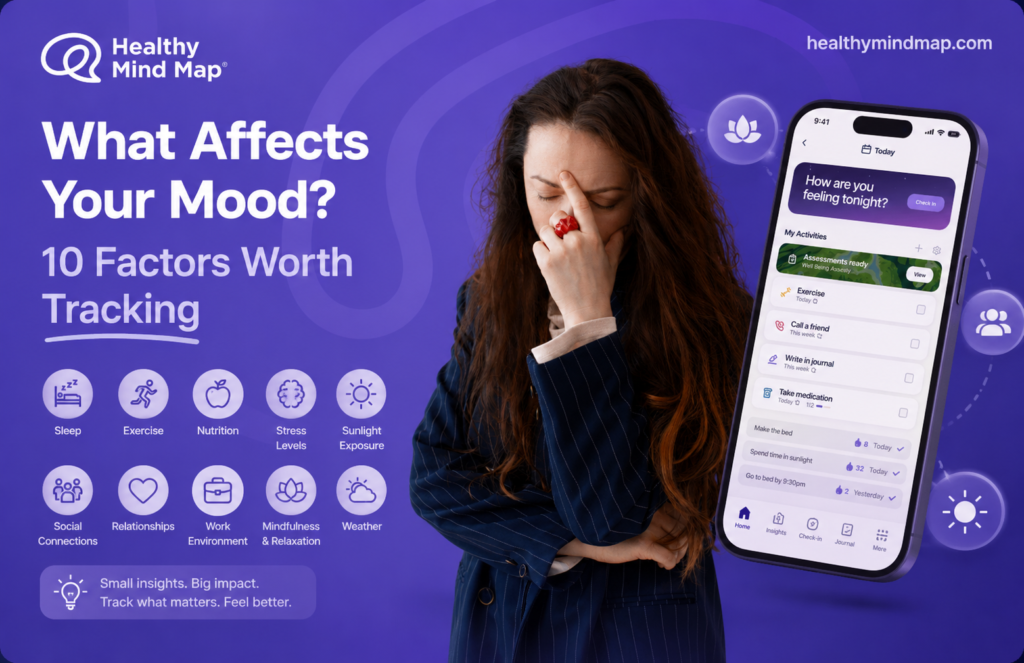


Have you ever had a day when your mood suddenly dropped and you could not explain why? Nothing major happened, yet you felt unusually irritated, anxious, tired, or emotionally drained. On another day, you might feel energized and positive without knowing exactly what changed. The answer is rarely one single thing.
If you are trying to understand what affects your mood, it helps to look at the patterns behind your everyday life. Sleep, movement, stress, food, relationships, environment, and even your routine can influence emotional well-being. Research from organizations including the NIH and CDC supports connections between several of these lifestyle factors and mental health.
Instead of guessing what causes mood changes, regular mood tracking can help you identify your own patterns. A simple daily mood check in gives you a record you can review over time rather than relying entirely on memory.
Sleep should be one of the first mood affecting factors you track. Getting too little sleep does more than make you tired. Sleep deficiency can affect emotional regulation, decision-making, motivation, and the ability to cope with change. The CDC also notes that adequate sleep can reduce stress and improve mood.
If you are trying to determine what affects your mood, record both how long you sleep and how rested you feel the next morning. After several weeks of mood tracking, you may discover that some of your apparent causes of mood changes are connected to nights when your sleep was shorter or more disrupted than usual.
Stress is another obvious answer to what causes mood changes, but people often underestimate how much stress they are carrying. A demanding deadline, financial concerns, caregiving responsibilities, relationship tension, or simply having too many things to manage can influence how you feel throughout the day. Chronic stress can also make emotional regulation more difficult.
During your daily mood check in, consider recording your stress alongside your mood. A simple low, moderate, or high rating may be enough. Over time, you may start identifying which situations are significant things that affect your mood rather than assuming your emotions are changing randomly.
How much did you move today? Physical activity is one of the most useful factors that affect mood to monitor because its relationship with emotional well-being is well established. The CDC reports that physical activity can reduce short-term feelings of anxiety, improve sleep, and lower long-term risks of depression and anxiety.
That does not mean every workout will immediately make you happy. Instead, use mood tracking to understand your personal response. You may notice that walking outside, exercising, stretching, or simply moving more throughout the day is associated with better energy and mood.
What you consume throughout the day can influence how you feel physically, which can also affect emotional well-being. NIMH recommends regular, healthy meals and adequate hydration as part of mental health self-care and specifically suggests paying attention to how caffeine and alcohol affect mood and well-being.
Rather than obsessively documenting every meal, focus on patterns. Did you skip lunch? Drink considerably more caffeine than usual? Go several hours without water? When investigating what affects your mood, these everyday details can provide useful context. Food and hydration may be overlooked mood affecting factors, especially when low energy or irritability appears at predictable times.
Humans are social, and the quality of our relationships can influence emotional well-being. NIH research has identified social support as an important factor associated with mental health, while its emotional wellness guidance recommends building healthy social connections.
This makes social interaction one of the things that affect your mood worth including in a daily mood check in. Ask yourself whether you felt connected, supported, lonely, misunderstood, or socially exhausted that day. Importantly, more interaction is not always better. What matters is learning which relationships and social situations affect your mood.
Your phone may be another answer when you are wondering what causes mood changes. Research summarized by NIH has found associations between greater amounts of certain screen-based activities and poorer mental health outcomes in some populations. However, context matters, and not every type of screen use affects everyone in the same way.
Instead of assuming technology is automatically harmful, track your experience. Does late-night scrolling interfere with sleep? Does social media leave you energized, connected, anxious, or emotionally drained? Adding screen habits to your mood tracking can help determine whether they are meaningful mood affecting factors for you.
Routine provides structure, and changes in routine can influence sleep, meals, exercise, stress, and social interaction all at once. Maybe weekends feel noticeably different from weekdays. Perhaps Mondays consistently bring more anxiety, while days when you follow a morning routine feel easier. These patterns can become clearer through a consistent daily mood check in.
When examining factors that affect mood, track a few recurring activities rather than attempting to document every minute of your day. The goal is to identify relationships between your routines and emotions.
That is one reason Healthy Mind Map combines daily activity awareness with emotional tracking: behaviors and emotions often make more sense when viewed together.
Your surroundings can also become subtle things that affect your mood. Noise, clutter, weather, lighting, lack of privacy, long commutes, and time spent indoors can all influence how comfortable or stressed you feel. Time in nature and relaxing activities are among the strategies recommended by NIMH and CDC for supporting mental well-being and managing stress.
During mood tracking, consider where you spent most of your day. You may eventually discover that some causes of mood changes have less to do with your thoughts and more to do with the environment surrounding you.
Mental and physical health are closely connected. The CDC notes that mental and physical health influence one another, which is why changes in physical well-being deserve attention when examining emotional patterns. Illness, pain, fatigue, medication changes, hormonal fluctuations, and other physical factors can sometimes coincide with changes in mood.
This does not mean you should diagnose the cause yourself. Instead, recording these experiences alongside a daily mood check in may provide useful information to discuss with a healthcare professional when appropriate. When asking what affects your mood, your physical health should not be ignored.
For someone already using professional therapy services, emotional patterns can provide useful context for understanding progress. People often ask how to know if therapy is working because progress can be difficult to recognize from one appointment to another. You may still experience difficult emotions even while becoming better at understanding triggers, setting boundaries, communicating, or recovering after stressful situations.
Consistent mood tracking can complement therapy services or online counselling by giving you a clearer record of what happens between appointments. If you’re wondering how to know if therapy is working, don’t look only for fewer difficult days. Look at how you respond to those days as well.
You do not need to document dozens of variables every day. Start your daily mood check in with four or five areas that seem most relevant. For example, record your mood, sleep, stress, physical activity, and one significant event from the day.
After a few weeks, review the information. What repeatedly appears before your best days? What happens before difficult ones? Are there recurring factors that affect mood you had not noticed before?
This is where Healthy Mind Map can be useful. The platform helps individuals track daily activities, emotions, assessments, and patterns over time, making it easier to explore what affects your mood without relying entirely on memory.
Healthy Mind Map does not provide therapy services or online counselling. Instead, its tracking and wellness features can complement professional support when someone is already receiving it.
Understanding your mood is less about finding one universal cause and more about recognizing your personal patterns. Sleep may matter enormously one week. Stress or relationships may be more influential the next. That is why learning what affects your mood requires observation over time.
A consistent daily mood check in and thoughtful mood tracking can help turn “I don’t know why I feel this way” into a more useful understanding of the factors that affect mood in your own life. And once you can see the pattern, you are in a much better position to decide what deserves your attention.
What affects your mood the most?
There is no universal answer to what affects your mood most. Common mood affecting factors include sleep, stress, physical activity, relationships, nutrition, physical health, and daily routines. Tracking several factors over time can help reveal which ones matter most for you.
What causes mood changes for no apparent reason?
When considering what causes mood changes, remember that the trigger may not always be immediately obvious. Sleep, accumulated stress, physical health, hormones, routine changes, or environmental factors can contribute. Persistent or concerning mood changes should be discussed with a qualified healthcare professional.
What factors should I include in a daily mood check in?
A practical daily mood check in can include your overall mood, sleep quality, stress, activity level, social interaction, and major events. Consistent mood tracking is generally more useful than trying to record every possible variable.
Can mood tracking show how to know if therapy is working?
It can provide useful context. If you’re asking how to know if therapy is working, review changes in emotional patterns, coping, recovery time, triggers, and daily functioning. Records can also provide useful topics to discuss with providers offering therapy services or online counselling.
How can Healthy Mind Map help identify causes of mood changes?
Healthy Mind Map supports emotional and daily activity tracking, assessments, and analytics. By reviewing patterns over time, users may better understand things that affect your mood and identify possible causes of mood changes that are difficult to notice day to day.



Join Healthy Mind Map today. Your first step toward understanding your mental health.