GO BACK
Emotional Labor: What it is, Examples and How to Recover
Emotional labor is the effort of managing your feelings and expressions to meet the expectations of a job
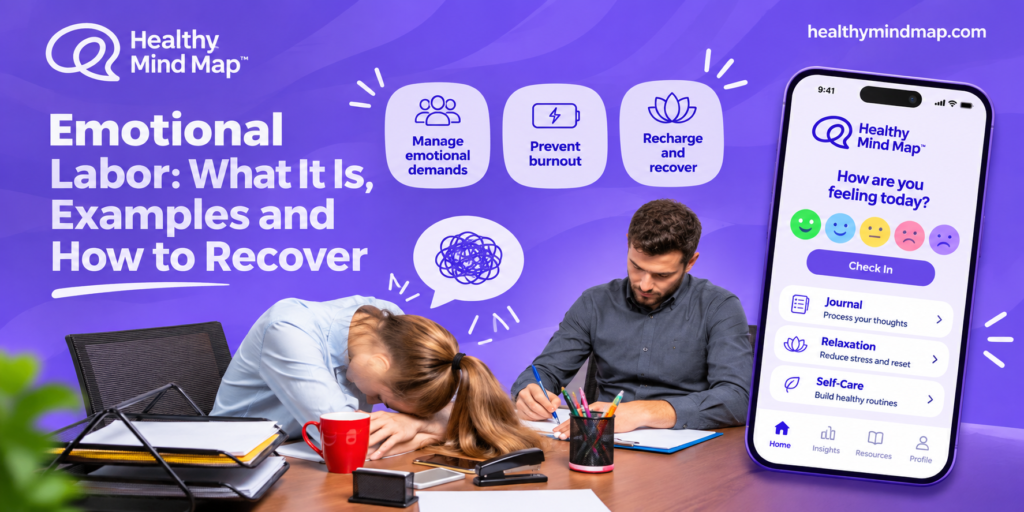

Emotional labor is the effort of managing your feelings and expressions to meet the expectations of a job or relationship, like staying cheerful with a rude customer or keeping calm for everyone at home. Done constantly, especially when you hide what you really feel, it can drain your energy and contribute to burnout. Recovery starts with noticing it, building in short resets during the day, naming what you actually feel, and sharing the load where you can.
You smile through a difficult client call. You stay patient when you’d rather snap. You remember everyone’s needs, smooth over tension and keep the mood light, then wonder why you feel exhausted when you haven’t “done” anything physical.
That tiredness is real, and it has a name: emotional labor. Here’s what it means, where it shows up, the signs it’s taking a toll, and practical ways to recover.
Put your feelings into words in just a few minutes. Try for free.
Emotional labor is the work of managing your emotions, and how you show them, to meet what’s expected of you. It covers any situation where you regularly regulate your feelings for others, at work, at home or in relationships.
It helps to know the difference between a mood, an emotion and a feeling. Emotional labor is mostly about the gap between the emotion you feel and the one you’re expected to show.
| Where | Examples |
| At work | Staying upbeat with frustrated customers, calming upset patients, staying neutral in tense meetings, managing a team’s morale |
| At home | Keeping the peace during arguments, remembering everyone’s needs and plans, comforting others while hiding your own stress |
| In relationships | Always being the one who checks in, managing a partner’s or friend’s moods, avoiding topics to keep things calm |
Jobs with a lot of emotional labor include healthcare, teaching, customer service, hospitality, social work and caregiving. But anyone can carry it.
Researchers describe two main ways people handle emotional labor:
The difference matters. A large review of three decades of research found that surface acting was more strongly linked to emotional exhaustion and lower well-being, while deep acting had weaker or mixed effects. In other words, the constant gap between what you feel and what you show is often what wears you down most.
They overlap but aren’t the same. The mental load is the invisible planning and remembering: appointments, groceries, birthdays and deadlines. Emotional labor is about managing feelings, both your own and other people’s. Many people carry both at once, which is why it can feel like you’re always “on,” even when you’re resting.
You may be carrying too much emotional labor if you:
If several of these sound familiar, it’s a sign to make space for recovery, not a sign you’re doing something wrong.
Yes, it can contribute. When you regularly suppress your real feelings or keep performing calm and cheerfulness, it uses up mental and emotional energy. Over time, especially without breaks or support, this can lead to emotional exhaustion, one of the core signs of burnout.
Common burnout warning signs include constant tiredness, feeling detached or cynical about work, and feeling less effective than you used to. Noticing these early gives you more room to recover.
One simple way to catch the pattern is to check in with yourself at the end of each day. A quick rating of your mood and energy, plus a note about your toughest interaction, can show you which days, people or tasks drain you most. An emotional tracking app makes this a 30-second habit instead of one more thing to remember.
Notice which days drain you most. Log a quick mood check-in after work, free.
Recovery is about closing the gap between what you show and what you feel, and giving yourself space to refill.
Try this: Guided Journal in the App · 5 min
You can’t always remove emotional labor from a job, but you can make it more manageable:
Try this: 5 Mindful Breaths · 1 min A quick reset between meetings, calls or shifts.
At home, emotional labor often goes unnoticed because it’s invisible. A few ways to make it fairer:
Consider talking to a therapist, counselor or doctor if:
A therapist can help you set boundaries, process what you’ve been holding in and find ways to manage demanding roles.
You spend all day caring for others. Take two minutes for yourself.
What Is Emotional Labor in Simple Terms?
Emotional labor is the effort of controlling your feelings and expressions to meet expectations, like staying calm or cheerful at work even when you feel stressed or upset.
What Is an Example of Emotional Labor?
A customer service worker staying polite with an angry customer, a nurse staying calm with anxious patients, or a family member always keeping the peace at home are all examples.
Is Emotional Labor Bad for You?
Not always. In small amounts it’s part of everyday life. It becomes harmful when it’s constant, when you regularly hide your real feelings, and when you don’t get time to recover.
Can Emotional Labor Cause Burnout?
It can contribute. Long-term emotional labor, especially faking emotions you don’t feel, is linked to emotional exhaustion, a key part of burnout.
What Is the Difference Between Emotional Labor and Mental Load?
Emotional labor is about managing feelings. The mental load is about planning and remembering tasks. Many people carry both at the same time.
How Do I Recover From Emotional Exhaustion?
Name what you feel, take short breaks during the day, build a decompression routine after work, protect your sleep and spend time where you don’t have to perform. If exhaustion lasts, talk to a professional.
Who Coined the Term Emotional Labor?
Sociologist Arlie Russell Hochschild introduced the term in her 1983 book The Managed Heart.



Join Healthy Mind Map today. Your first step toward understanding your mental health.