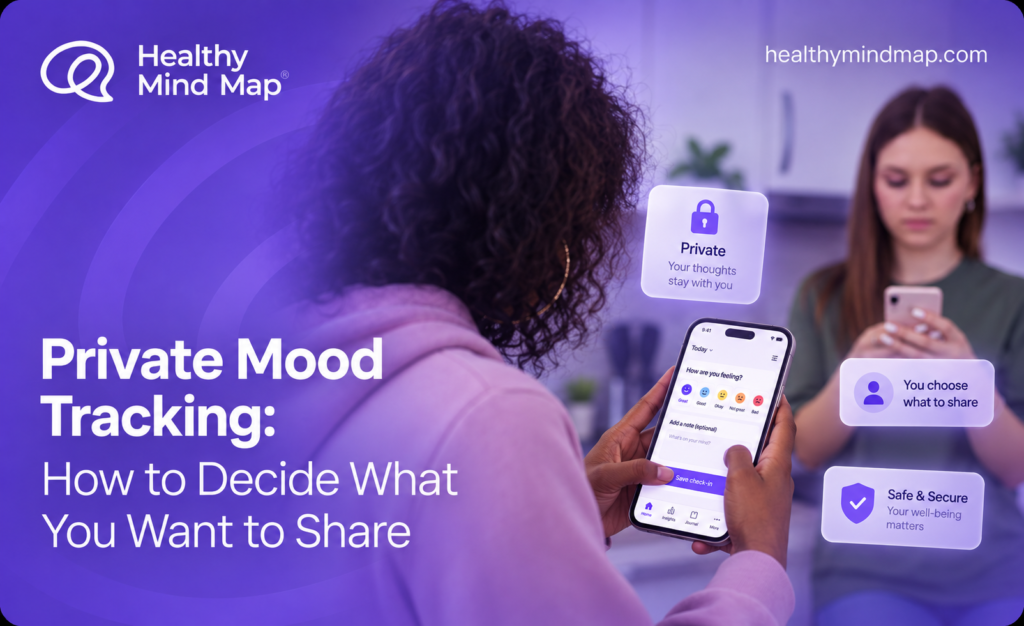
Talking about our feelings has never been easier. Between social media, online wellness communities, and digital journals, there’s no shortage of places to put our emotions into words. But as sharing has become more public, a quieter trend has been growing alongside it: people want more control over their emotional data, not less.
That’s why the best private mood tracker apps have become such a draw in 2026. Emotional tracking is genuinely useful for building self-awareness, but usefulness and openness aren’t the same thing. Plenty of people want to track how they feel without broadcasting it to anyone.
So how do you decide what belongs in a shared conversation and what belongs only to you?
It really comes down to your comfort level, what you’re hoping to get out of tracking, and the kind of support you’re after. Whether you’re comparing the best mood tracker apps on the market or just trying out your first mood journal, figuring out your privacy preferences matters as much as the tracking itself.
Why Private Mood Tracking Matters
Emotional tracking only works if people are willing to be honest in it. If someone suspects their entries might be seen by others, they’ll often soften the truth or skip the hard stuff entirely and that quietly undermines the whole point of tracking.
This is exactly why private mood tracking apps have become a core feature of modern wellness tools rather than a niche add-on.
A good mood tracking app should feel like a private notebook, not a public stage. Whether you’re logging stress, anxiety, or the small emotional shifts of an ordinary day, knowing the entry is yours alone makes it easier to tell the truth.
Not Every Emotion Needs an Audience
There’s a common assumption that emotional wellness means talking about everything you feel, to everyone. But one of the quiet benefits of a private mood diary app is that it gives you room to sit with an emotion before deciding whether it’s even worth discussing.
Your daily mood tracker might show you that stress spikes every evening after work. A pattern like that might come from an emotion tracker that simply logs how certain conversations or situations affect your mood over time. Either way, the insight has value on its own you don’t need to share it for it to matter. Good emotional tracking apps are built for self-understanding first, not for an audience.
When Sharing Actually Helps
None of this means privacy has to mean total isolation. There are moments when sharing a piece of what you’ve tracked can genuinely help, especially with:
- Family members
- Close, trusted friends
- Therapists or counselors
- Healthcare providers
Often, the useful thing to share isn’t every entry it’s the pattern. A daily mood tracking app that shows trends over weeks or months can make it much easier to explain what’s been going on, especially if a low mood or a stress pattern has stuck around long enough to affect daily life. But that call should always be yours to make, not something the app pushes you toward.
What’s Worth Keeping Private
Some things are better left in your own mood journal than brought into a conversation. Many people choose to keep the following private by default:
- Personal reflections
- Relationship concerns
- Work frustrations
- Daily stress triggers
- Personal goals
- Raw emotional reactions
A well-built emotion tracker respects that instinct. It’s part of why so many people now look specifically for a secure mood tracker rather than a general wellness app that happens to include a mood feature the difference in how seriously privacy is treated shows up quickly.
What to Look For in a Mood Tracking App
Not every app treats privacy or usefulness the same way. As you compare options, it’s worth asking:
- Can I control exactly what gets shared, and with whom?
- Is my data stored securely?
- Can I look back at my history privately, without anyone else seeing it?
- Does the app encourage honest reflection instead of constant sharing?
Some people go a step further and look for a mood tracker without an account requirement no email, no login tied to an identity, just a private space to log how they feel. Others want more depth: a mood tracker with sleep tracking, habit tracking, or symptom tracking built in, so mood isn’t logged in isolation but alongside the factors that actually shape it, like rest, exercise, or physical symptoms.
The strongest private mood tracking apps tend to support personal growth quietly, in the background, rather than nudging users to post, share, or compare.
Why Honesty Makes Tracking Work
The point of a mood diary isn’t to produce a flattering record it’s to produce a true one. If someone only logs the good days because they’re worried about who might see the bad ones, the tracking loses most of its value.
This is where private mood tracking pays off over time. A good emotion tracker gives people room to log the hard days honestly, without bracing for judgment. Those honest entries are what eventually reveal real patterns the actual mood pattern tracker function of the app rather than just a highlight reel.
Where Mental Health Apps Are Headed
One of the clearest shifts in mental health apps this year is a move toward user ownership. People increasingly expect their tools to offer:
- Stronger privacy controls
- Flexible, opt-in sharing
- A genuinely secure mood journal
- Personalized insights drawn from their own data
- Clear, transparent handling of that data
Instead of nudging people toward constant sharing, the direction is toward giving users full say over their own information. It reflects something fairly simple: emotional wellness starts with trust, not exposure.
How Healthy Mind Map Approaches Private Reflection
Healthy Mind Map was built around the idea that emotional awareness starts with the individual, not an audience. It functions as a private mood tracking app first a place to log emotions, habits, and daily reflections in a structured, low-pressure way.
Rather than encouraging public posting, it’s designed to help people notice their own emotional patterns over time. Through its daily mood tracker and built-in mood pattern tracker, users can see trends build up, and then decide entirely for themselves if, when, and with whom to share any of it. That balance real insight without pressure to disclose is central to what a modern, secure mood tracker should offer.
Building Better Sharing Habits
Deciding what to share is always a personal call. Before pulling something from your mood tracker app into a conversation, it can help to ask:
- Am I sharing this because it will actually help me?
- Do I trust this person with it?
- Will this conversation support how I’m feeling, or add to it?
- Am I comfortable talking about this today?
There’s no single right answer. Some days, talking it through is the healthier move. Other days, the healthiest thing is letting your private mood tracking stay exactly that private.
Final Thoughts
Tracking your emotions is one of the more valuable habits you can build, but only if you feel free to be honest while doing it. That’s the whole case for private mood tracking. Whether you’re using a daily mood tracker app, exploring a new emotion tracker, or just looking for the best mood tracker apps to try this year, the underlying idea stays the same: emotional awareness starts with trust in the tool you’re using.
The most important audience for your emotional journey was never everyone else. It’s you. And what you choose to share or not should always be your call.
Frequently Asked Questions
What is private mood tracking?
It’s the practice of logging your emotions for your own reflection while keeping full control over who, if anyone, gets to see that information.
Why are mood tracker apps becoming more popular?
They help people spot emotional patterns, build self-awareness, and notice changes over time often patterns that are hard to see day to day without something tracking them consistently.
What should I look for in a mood tracking app?
Look for secure storage, flexible privacy settings, meaningful insights (not just raw logs), and an interface simple enough that you’ll actually keep using it. Some people also prioritize a mood tracker without account sign-up for extra privacy, or one that includes sleep, habit, or symptom tracking for a fuller picture.
Are emotion tracking apps secure?
Many are built with privacy in mind, but security varies by platform. It’s worth checking each app’s privacy policy before storing anything sensitive.
Why does privacy matter so much in mental health apps right now?
Because users increasingly want ownership over their own emotional data the ability to decide exactly what stays private and what, if anything, gets shared.