GO BACK
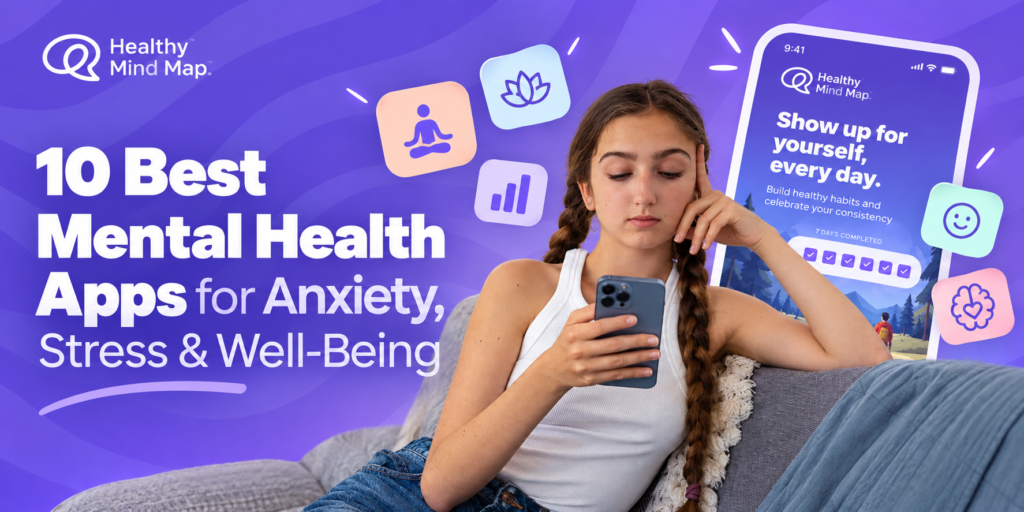
10 Best Mental Health Apps for Anxiety, Stress & Well-Being
The best mental health apps in 2026 are Healthy Mind Map for mood tracking and therapy progress, Headspace


The best mental health apps in 2026 are Healthy Mind Map for mood tracking and therapy progress, Headspace for beginner meditation, Calm for sleep and stress relief, MindShift CBT for anxiety skills, Wysa for AI-guided emotional support, Talkspace for licensed therapists, and Sanvello for insurance-covered CBT tools. The right choice depends on what you need most: relaxation, structured skill-building, professional therapy, or measurable progress you can share with your therapist. We compared 10 top apps on evidence-based methods, usability, privacy, therapist integration, and progress tracking, so you can find the tool that fits your mental health goals.
Every app on this list was evaluated against a consistent set of criteria:
| App | Best For | Approach | Free Option | Works With Your Therapist |
|---|---|---|---|---|
| Healthy Mind Map | Mood tracking and therapy progress | Tracking, assessments, CBT tools | 7-day free trial | Yes, selective sharing |
| Headspace | Beginner meditation | Mindfulness, meditation | Free trial | No |
| Calm | Sleep and relaxation | Meditation, sleep stories | Limited free version | No |
| Youper | AI-guided self-help | AI chat, CBT, ACT | Free basic version | No |
| MindShift CBT | Anxiety skills | CBT | Free | No |
| Moodfit | Habit and mood tracking | CBT, journaling | Free core features | No |
| Wysa | Private emotional support | AI chat, CBT, DBT | Free core features | Optional coaching |
| Insight Timer | Free meditation library | Meditation | Mostly free | No |
| Talkspace | Licensed therapy | Text and video therapy | No, insurance may cover | Is therapy |
| Sanvello | Insurance-covered CBT tools | CBT, mindfulness, peer support | Limited free version | No |
Best for: Outcome-driven mental health tracking for individuals and therapy support for providers
Available on: iOS and Android
If you are serious about understanding your mental health journey not just exploring it casually Healthy Mind Map is built for exactly that. Unlike many wellness apps that focus solely on relaxation or meditation, Healthy Mind Map is designed around one core goal: helping users achieve real, measurable progress in their emotional well-being.
The app combines daily mood check-ins, industry-standard assessments, personalized activity tracking, and rich analytics into a single, privacy-first platform. Over time, you stop guessing how you are doing and start actually seeing it.
For therapists, Healthy Mind Map provides a clinician-facing view of client progress between sessions reducing recency bias, improving treatment targeting, and making every session more productive without adding administrative burden.
Your data is fully encrypted and you remain in complete control of what you share and with whom. Healthy Mind Map does not sell your data, period.
Pricing: Free 7-day trial, then subscription required.
Track how you feel, spot your patterns, and share progress with your therapist.
Best for: Mindfulness and beginner-friendly meditation
Available on: iOS and Android
Headspace remains one of the most recognized mindfulness apps available. Its structured meditation courses, sleep content, and guided breathing exercises make it an excellent starting point for anyone new to mindfulness practice. The app is approachable, well-designed, and backed by a growing body of internal research on its effectiveness for stress and focus. For users looking for a calm, habit-building meditation experience, Headspace delivers consistently.
Pricing: Free trial available; subscription required for full access.
Best for: Sleep support, relaxation, and stress relief
Available on: iOS and Android
Calm focuses heavily on sleep and relaxation, making it a strong choice for people whose anxiety most disrupts their rest. Its Sleep Stories, daily guided meditations, and breathwork tools are polished and easy to use. Calm is particularly well-suited for users who want a soothing, low-effort way to wind down at the end of a difficult day. It is less focused on tracking or clinical outcomes and more on creating a peaceful daily ritual.
Pricing: Free limited version; subscription required for full library.
Best for: AI-guided self-help using CBT and other evidence-based techniques
Available on: iOS and Android
Youper is an AI emotional health assistant developed with psychiatrists. It guides users through short conversational check-ins that draw on cognitive behavioral therapy, acceptance and commitment therapy, and mindfulness to help reframe negative thoughts. It also includes symptom tracking, so users can see how their anxiety and mood change over time. Youper works well for people who want quick, private support between therapy sessions. It is AI-only, though, so it does not connect you with a human therapist if your symptoms escalate.
Pricing: Free basic version; subscription required for full features.
Best for: Anxiety-specific tools grounded in cognitive behavioral therapy
Available on: iOS and Android
MindShift CBT was developed specifically for anxiety management using evidence-based CBT techniques. The app offers thought journals, coping cards, breathing exercises, and structured guides for managing worry, panic, perfectionism, and social anxiety. Unlike meditation-focused apps, MindShift is built around changing the way you think helping users challenge anxious thought patterns and develop healthier responses. It is particularly useful for people who prefer a structured, skills-based approach over passive relaxation content.
Pricing: Free.
Best for: Habit building and comprehensive mood tracking
Available on: iOS and Android
Moodfit takes a holistic approach to mental health by combining mood journaling, CBT tools, gratitude practices, sleep tracking, and mindfulness exercises in one app. Users can track lifestyle factors like water intake and physical activity alongside their emotional state, then see how these variables interact over time. For people who want a comprehensive self-monitoring tool that connects physical habits to mental health outcomes, Moodfit offers a solid and affordable solution.
Pricing: Free core features; premium subscription available.
Best for: Private emotional support through AI-guided conversations
Available on: iOS and Android
Wysa is an AI chatbot that helps users explore and process their emotions through guided conversations, journaling prompts, and evidence-based coping exercises. It draws on CBT, dialectical behavior therapy (DBT), and mindfulness principles to help users manage stress, anxiety, and negative thinking. Many users turn to Wysa as a private, stigma-free space for emotional self-reflection especially outside of business hours when professional support is unavailable. Optional access to human coaches is also available for users seeking more personalized guidance.
Pricing: Free core features; paid coaching add-on available.
Best for: Free access to a massive meditation and mindfulness library
Available on: iOS and Android
Insight Timer stands out for its sheer volume of free content over 160,000 guided meditations, music tracks, and mindfulness exercises contributed by teachers from around the world. Whether you are new to meditation or have an established practice, the library covers topics from anxiety and sleep to grief, focus, and spiritual well-being. Community features, live events, and a customizable meditation timer round out a well-built platform that remains largely free to use.
Pricing: Mostly free; premium subscription available for offline content and courses.
Best for: App-based access to licensed therapists
Available on: iOS and Android
Talkspace connects users directly with licensed mental health professionals through text messaging, video sessions, and live chat all from a smartphone. For people who want genuine professional therapy without the logistical barriers of in-person appointments, Talkspace provides a convenient, HIPAA-compliant alternative. It accepts many major insurance plans, which can make it a genuinely affordable option for those seeking real clinical care. Talkspace is not a self-help tool it is a legitimate telehealth platform.
Pricing: Subscription-based; insurance may cover costs.
Best for: Clinically validated tools for anxiety and depression
Available on: iOS and Android
Sanvello combines mood tracking, guided journeys, coping tools, and a peer community into a clinically validated app designed specifically for anxiety and depression. Its content is grounded in CBT and mindfulness, and the app has been studied in clinical research settings. Sanvello is particularly notable for being covered by many health insurance plans in the United States, making it one of the more accessible options for users with coverage who want a structured, research-backed mental health support tool.
Pricing: Free limited version; premium features and insurance coverage available.
With hundreds of mental health apps available in 2026, it can be difficult to know where to start. The right app for you depends on what kind of support you need most.
Ask yourself these questions before choosing:
If consistent tracking, measurable outcomes, and therapist integration matter to you, Healthy Mind Map is built precisely for that purpose. If you primarily want relaxation content, Calm or Headspace may be a better fit. If professional therapy access is the priority, Talkspace or Sanvello are worth exploring.
The short answer is: yes — with the right expectations.
Research published in World Psychiatry found that smartphone-based mental health interventions can meaningfully reduce symptoms of depression and anxiety for some users, particularly when the apps are grounded in evidence-based approaches like CBT or mindfulness. A review in Evidence-Based Mental Health similarly found that user engagement with mental health apps is associated with improved emotional awareness and coping skills.
That said, the research also makes clear that apps work best as a supplement to not a standalone replacement for professional care. Apps can help you build skills, recognize patterns, and maintain consistency between therapy sessions. They are not equipped to diagnose mental health conditions or provide individualized clinical treatment.
The most effective approach combines both: using a well-designed app like Healthy Mind Map for daily structure and insight, alongside regular sessions with a licensed therapist when needed.
Mental health apps are genuinely helpful tools but there are situations where professional care is the right next step. Consider speaking with a licensed clinician if:
Apps like Healthy Mind Map are designed to support your journey including helping you recognize when patterns in your data suggest you may need additional care. That kind of visibility is one of the most practical things a mental health app can offer.
Track how you feel, spot your patterns, and share progress with your therapist.
The best mental health app is the one you will actually use consistently, honestly, and with intention. In 2026, the options are better than ever, covering everything from AI-guided conversations and mindfulness libraries to structured CBT tools and full telehealth platforms.
Healthy Mind Map stands apart because it is built around outcomes. Not just mood logging, but real insight into what is working, what is not, and how your daily habits connect to your emotional well-being all within a secure, privacy-first environment that you control.
Whether you are just beginning to pay attention to your mental health or you are actively working through therapy, the right tools can make a meaningful difference.
What is the best mental health app in 2026?
It depends on your goal. Healthy Mind Map is best for tracking progress, Headspace and Calm for meditation, and Talkspace for licensed therapy.
What is the best free mental health app?
Insight Timer and MindShift CBT are largely free. Moodfit, Wysa, and Youper also offer free core features.
What is the best app for anxiety?
MindShift CBT is built specifically for anxiety. Healthy Mind Map helps you track anxiety patterns over time and share them with your therapist.
Which mental health apps take insurance?
Talkspace and Sanvello work with many US insurance plans. Check with your provider to confirm your coverage.
Can a mental health app replace therapy?
No. Apps can support skills and consistency between sessions, but they can’t diagnose or replace care from a licensed professional.
Are mental health apps private?
It varies by app, so review each privacy policy. Healthy Mind Map encrypts your data, never sells it, and lets you choose exactly what to share.


Join Healthy Mind Map today. Your first step toward understanding your mental health.