GO BACK
How to Track Your Mood: A Simple Guide for Beginners
To track your mood, check in once or twice a day at the same time. Rate how you


To track your mood, check in once or twice a day at the same time. Rate how you feel on a simple 1 to 5 scale, name the main emotion in one or two words, and note a few things that may affect it, such as sleep, activity and the people you spent time with. After two to four weeks, look back over your entries to spot patterns. Each check-in takes under two minutes. Most people start tracking their mood after a rough patch, when a therapist suggests it, or because they want to understand why some days feel heavier than others. You don’t need a complicated system, just a consistent one. This guide covers what to track, when to track it, and how to turn a few weeks of check-ins into useful insight about yourself.
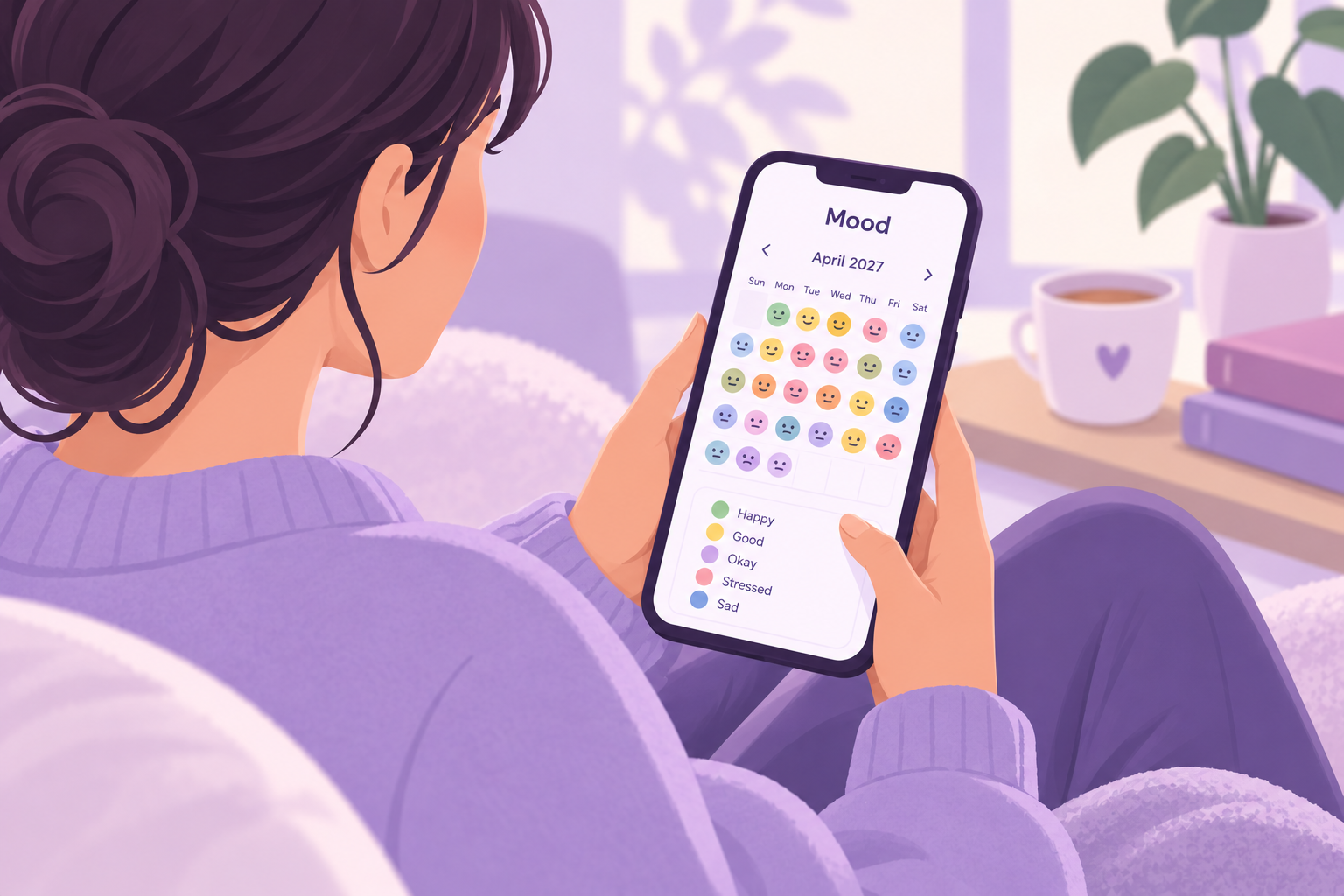
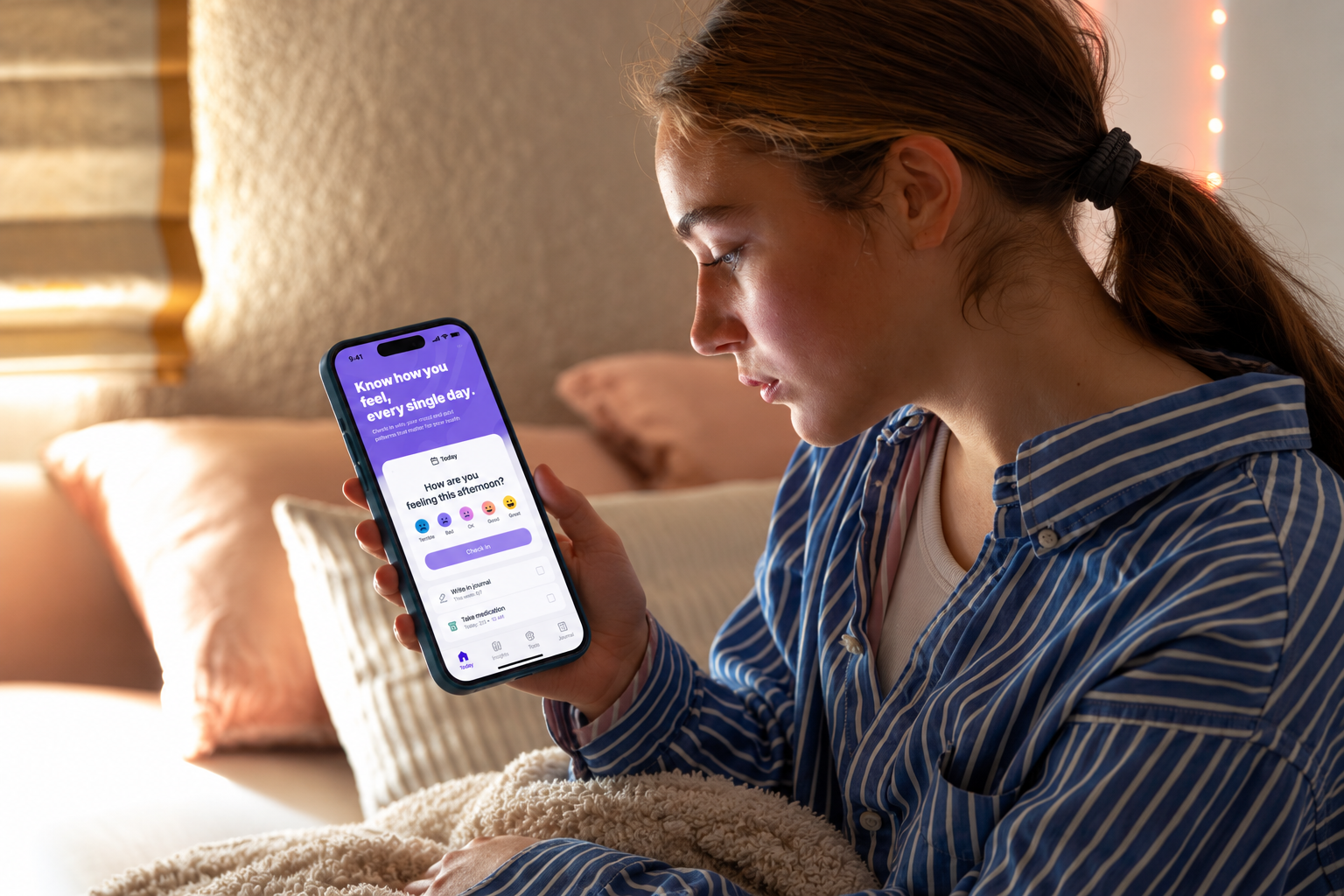
Never miss a check-in. Set a daily reminder and log your mood in a few taps.
Mood tracking (also called mood monitoring or mood charting) is the habit of regularly recording how you feel. Each entry usually has a rating, an emotion word and a few notes about your day. Over time, the entries form a record that shows how your mood rises and falls, and what tends to come before the good and hard days. You can track on paper, in a notes app, in a spreadsheet, or in a mood tracker app that reminds you to check in and charts the results for you.
Mood tracking won’t change how you feel overnight. Research suggests, though, that it builds the self-awareness that makes other changes easier:
These are only a few of the benefits of mood tracking, and most of them start to show within the first few weeks.
The best method is the one you’ll stick with. Here’s how the common options compare:
| Method | Good for | Watch out for |
| Paper journal or printable chart | People who like writing by hand, or want less screen time | Easy to forget; patterns are hard to see without charts |
| Notes app or spreadsheet | People who want full control over what they log | No reminders; you build every chart yourself |
| Mood tracker app | Busy people who want reminders and automatic charts | Pick one with a simple check-in, or you’ll stop using it |
A 1 to 5 scale is enough for most people. A 1 to 10 scale gives more detail but makes each rating harder to decide. Whichever you choose, write down what each number means to you so your ratings stay consistent:
| Rating | What it might mean |
| 5 | Great: energized, calm or happy most of the day |
| 4 | Good: a few low moments, but mostly fine |
| 3 | Okay: neutral, getting through the day |
| 2 | Low: noticeably down, anxious or irritable |
| 1 | Very low: hard to function or get through the day |
A number tells you how much, and a word tells you what. “2, anxious” and “2, lonely” are very different days and call for different kinds of support. If you get stuck, start with these: calm, content, happy, hopeful, tired, bored, irritable, anxious, overwhelmed, sad, lonely, frustrated. Knowing the difference between a mood, an emotion and a feeling makes this step easier. A mood can last all day, while emotions come and go within it.
Context turns a list of numbers into insight. You don’t need to log everything. Pick three to five factors you suspect affect you:
What’s worth noting depends on what you’re working on. The factors to watch for mood tracking for anxiety, depression or stress are slightly different, so adjust your list as you learn.
Consistency matters more than detail. Pick one or two set times, such as mid-afternoon and before bed, and stick to them. Checking in at random times makes days harder to compare. The most common reason people stop tracking is that they forget. A daily reminder fixes that. In the free Healthy Mind Map app, you can set check-in reminders so a quick “How are you feeling?” prompt appears at the times you choose. Logging takes a few taps.
Bring your mood history to your next session. Export it as a PDF or image in seconds.
Tracking without reviewing is like taking photos you never look at. Once a week, spend five minutes looking back and ask:
Charts make this much easier. In Healthy Mind Map, the Analytics tab shows your mood over one week, one month, three months or six months. The Week in Review highlights patterns, so you don’t have to scroll back through every entry. [SCREENSHOT 2: Analytics tab, mood chart with 1 week / 1 month / 3 months / 6 months options. Alt text: “Mood trends chart over one month in the Healthy Mind Map app”]
Use this as a starting point on paper or in a spreadsheet. Fill in one row per check-in:
| Date and time | Mood (1-5) | Emotion word(s) | Sleep (hrs) | Movement | Who I saw | Notes |
| Mon, 3 pm | 3 | tired, okay | 6 | none | coworkers | long meeting |
| Mon, 9 pm | 4 | calm | 20-min walk | friend (call) | felt better after the walk |
Here’s a made-up example of how a week of simple check-ins can reveal a pattern:
| Day | Mood | Emotion | Sleep | Note |
| Mon | 2 | anxious | 5 hrs | big deadline |
| Tue | 3 | tired | 6 hrs | skipped lunch |
| Wed | 4 | content | 7.5 hrs | walked at lunch |
| Thu | 4 | calm | 8 hrs | dinner with a friend |
| Fri | 3 | irritable | 6 hrs | late-night scrolling |
| Sat | 5 | happy | 8 hrs | hike outdoors |
| Sun | 2 | low, anxious | 7 hrs | dreading Monday |
Here, the better days line up with seven or more hours of sleep, movement and time with people. The low days cluster around deadlines and Sunday evening. One week isn’t proof, but after a month, patterns like these become much clearer and give you specific things to try. If your ratings jump around more than this from day to day, you’re not alone. Most people wonder why their moods change so much, and a month of data is usually the first step toward an answer.
If you see a therapist or counselor, your mood record can make sessions more focused. You can show them how the last two weeks went instead of trying to remember. In Healthy Mind Map, you can export your mood reports as a PNG image or PDF and share them by email, messaging or any app on your phone. You decide what to share and with whom. If your therapist also uses Healthy Mind Map, they can connect with you through the Healthy Mind Map provider portal and assign assessments between sessions. Bringing real data to your sessions also makes it easier to tell whether therapy is working, because you and your therapist can see changes over weeks, not just how you feel on the day.
These are the problems people mention most often when they give up on mood tracking, and how to get past them:
Most of these come down to a handful of common mood tracking mistakes that are easy to fix once you know them.
Ready to see what your mood is really telling you? Start tracking free today.
How often should I track my mood?
Once or twice a day is enough for most people. Daily tracking gives you enough data to see patterns within two to four weeks. If you track once a day, do it in the evening so you can rate the day as a whole.
What is the best time of day to track my mood?
The best time is one you can keep consistent. Many people check in mid-afternoon and before bed. If you check in right after something very good or very bad happens, note the event so you can see why that rating stands out.
How long does it take to see patterns?
You may notice small patterns within a week or two. Clearer patterns, such as links to sleep, routine or certain days of the week, usually show up after about a month of regular check-ins.
Is it better to track my mood on paper or in an app?
Both work. Paper suits people who like writing by hand. An app is easier to keep up with because it reminds you to check in and turns your entries into charts automatically. Healthy Mind Map is free on iOS and Android.
Can mood tracking help with anxiety or depression?
Mood tracking is a self-awareness tool, not a replacement for professional care. Research suggests it can increase emotional self-awareness and help you notice what affects your mood. That can support the work you do with a therapist or doctor.
Is it normal for my mood to change from day to day?
Yes. Day-to-day changes are normal and are often linked to sleep, stress, hormones, food and what’s happening in your life. Tracking shows you which factors matter most for you. If your moods shift intensely or quickly and affect daily life, talk to a professional.



Join Healthy Mind Map today. Your first step toward understanding your mental health.