GO BACK
Free vs. Paid Mental Health Apps: What’s Actually Worth Paying For
The mental wellness industry has experienced enormous growth over the last few years. Today, there are thousands of
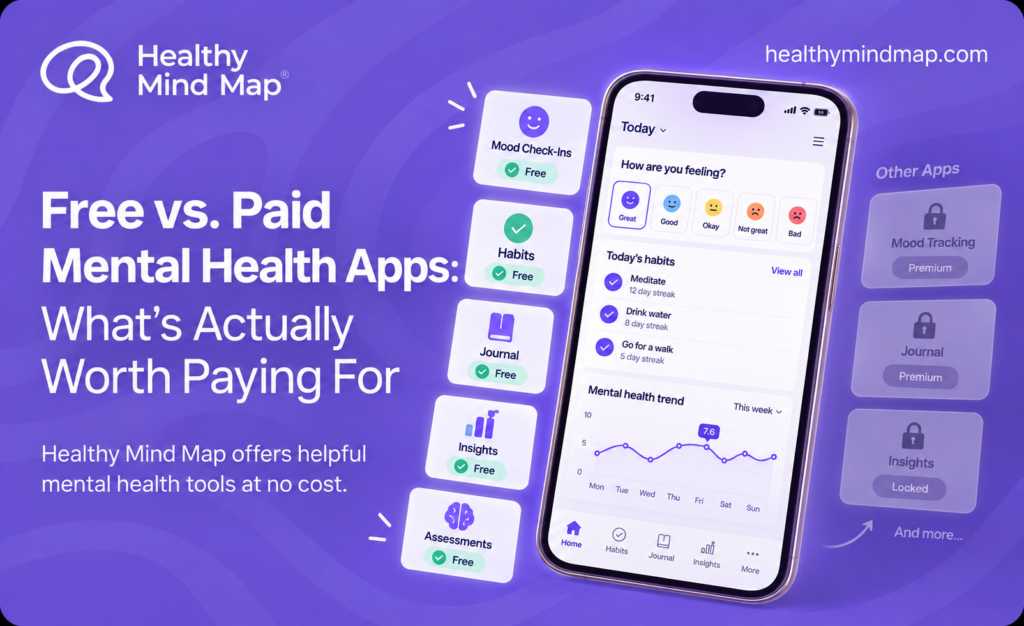


The mental wellness industry has experienced enormous growth over the last few years. Today, there are thousands of digital tools available to help people manage stress, improve emotional awareness, track habits, and build healthier routines. Whether someone is searching for a simple mood tracker, a meditation platform, or a full-featured counseling app, there is no shortage of options.
This growth has created an important question for users: when comparing Free vs. Paid Mental Health Apps, is paying for premium features actually worth it?
Many people begin with free mental health apps because they are accessible and easy to try. Others eventually upgrade to paid mental health apps hoping for more advanced features and deeper insights. However, not every premium subscription provides meaningful value.
Understanding the differences between Free Mental Health Apps and Paid Mental Health Apps can help you make a smarter decision based on your personal goals and needs.
The popularity of mental health apps continues to rise because people want convenient ways to support emotional well-being. Traditional wellness resources remain important, but digital tools provide accessibility that fits into everyday life.
Many users explore apps for mental health because they want to:
The market now includes everything from apps for anxiety and meditation platforms to apps for depression and comprehensive wellness trackers. As a result, consumers are increasingly evaluating Free vs. Paid Mental Health Apps to determine which option provides the greatest value.
Most Free Mental Health Apps are designed to introduce users to emotional tracking and wellness practices without requiring financial commitment.
Common features found in mental health apps free include:
Many best free mental health apps provide enough functionality for individuals who are just beginning their wellness journey.
For example, someone looking for a basic depression app may find that a free version provides sufficient tracking tools. Similarly, many free health apps include mindfulness exercises and self-guided reflection activities.
The advantage of free mental health apps is accessibility. Users can explore different platforms before deciding whether advanced features are necessary.
While Free Mental Health Apps provide a strong starting point, Paid Mental Health Apps often include more sophisticated tools.
Premium subscriptions may offer:
Many of the best mental health apps use premium plans to provide deeper data analysis and long-term trend visualization.
This distinction is important because not all users need advanced functionality. However, individuals focused on long-term emotional awareness often find value in enhanced mental health app features.
When evaluating Free vs. Paid Mental Health Apps, the question becomes whether those extra features support your specific goals.
For many individuals, free mental health apps provide everything necessary to begin improving self-awareness.
You may not need a paid subscription if your primary goals include:
Many best free mental health apps offer excellent introductory experiences. Someone using apps for anxiety for occasional stress management may find that a free version meets their needs completely.
Similarly, users interested in simple health and wellness apps often discover that free plans provide substantial value. In these situations, upgrading to Paid Mental Health Apps may not be necessary.
There are situations where Paid Mental Health Apps can provide meaningful benefits. If you are committed to long-term emotional growth, advanced tracking, and detailed insights, premium tools may be worthwhile.
For example, users who consistently monitor emotional patterns often benefit from enhanced mental health app features such as:
This is particularly relevant for individuals using apps for depression, apps for anxiety, or comprehensive wellness tracking systems. The value of Paid Mental Health Apps often depends on consistency. Users who engage regularly are more likely to benefit from advanced functionality.
One area where pricing varies significantly involves free therapy apps, best therapy apps, and counseling app platforms. Some free therapy app solutions provide educational resources, guided exercises, or peer support communities. However, platforms that connect users to licensed professionals typically involve subscription fees or session-based pricing.
When comparing Free vs. Paid Mental Health Apps, it is important to distinguish between self-guided wellness tools and professional services. Many best therapy apps charge because they provide access to qualified professionals rather than simply offering digital resources. Understanding this difference helps users make informed decisions.
Instead of focusing only on price, it is often more useful to evaluate the actual mental health app features being offered.
Ask yourself:
Some health and wellness apps offer dozens of premium features that many users never use. Others provide focused tools that deliver significant value. The best approach is to evaluate how each feature supports your personal wellness objectives.
Healthy Mind Map focuses on structured emotional awareness rather than overwhelming users with unnecessary complexity.
Instead of trying to be everything at once, the platform emphasizes:
For individuals comparing Free vs. Paid Mental Health Apps, this distinction is important because it aligns the platform with personal growth rather than direct clinical services.
The debate around Free vs. Paid Mental Health Apps ultimately comes down to value rather than price. Many free mental health apps offer excellent starting points for emotional awareness and self-reflection. At the same time, Paid Mental Health Apps can provide advanced tools that support deeper insights and long-term growth.
The most important factor is not whether an app is free or paid. It is whether the platform helps you stay consistent, build awareness, and move closer to your personal wellness goals. The best mental wellness tool is the one you actually use.
1. What is the difference between Free Mental Health Apps and Paid Mental Health Apps?
Free Mental Health Apps typically provide basic tracking and wellness tools, while Paid Mental Health Apps often include advanced analytics, personalized insights, and expanded features.
2. Are free mental health apps effective?
Yes. Many best free mental health apps provide valuable tools for mood tracking, journaling, and emotional awareness.
3. When are paid mental health apps worth the cost?
Paid Mental Health Apps are often worth it for users who want advanced tracking, long-term insights, and expanded wellness resources.
4. Are free therapy apps really free?
Some free therapy apps provide educational content and self-help resources, but platforms involving licensed professionals usually require payment.
5. What should I look for in mental health app features?
Useful mental health app features include emotional tracking, habit monitoring, progress insights, and tools that support your personal wellness goals.



Join Healthy Mind Map today. Your first step toward understanding your mental health.