GO BACK
Best Mental Health Apps in the USA (2026 Guide)
Mental health support used to mean one option: a weekly appointment, if you could get one. Today, millions
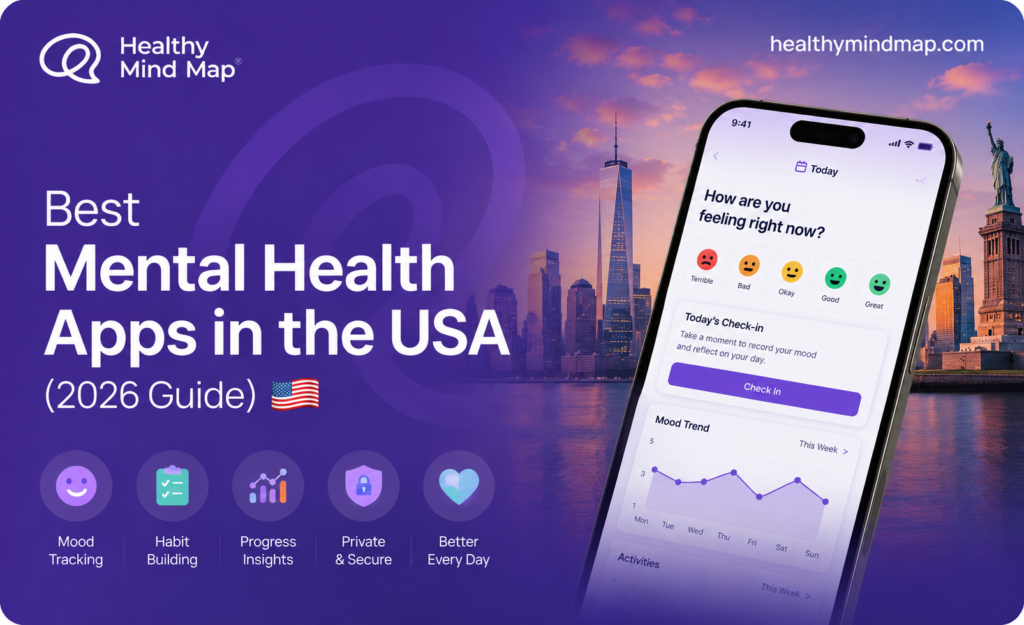


Mental health support used to mean one option: a weekly appointment, if you could get one. Today, millions of Americans carry a form of mental health support in their pocket. The challenge isn’t finding a mental health app anymore — it’s finding the right one out of the thousands now available.
We tested, compared, and researched the apps people in the USA actually rely on in 2026, looking at how each one helps with mood tracking, therapy progress, habit building, and emotional insight. Here’s our honest breakdown, starting with the app built specifically to help you and your support circle see real progress: Healthy Mind Map.
Healthy Mind Map was built differently from most apps on this list. Instead of being a general wellness app with a mood tracker bolted on, it was created by people who sat through real therapy sessions and wanted a way to carry what they learned beyond the therapy room.
What sets Healthy Mind Map apart:
Healthy Mind Map is especially valuable for people already in therapy who want to bring real, structured insight into each session, and for therapists who want a non-invasive way to understand a client’s life between appointments. You can explore everything it offers on the Healthy Mind Map features page, and if you’re deciding whether it fits your daily routine, our guide to the best apps to track mood, habits, and mental health breaks down exactly how its tracking tools compare to dedicated mood trackers.
Best for: People in active therapy, support circles, and anyone who wants their app-based insights to translate into real clinical progress.
Headspace remains one of the most recognized names in digital mental wellness, known for approachable, beginner-friendly guided meditations, sleep content, and structured mindfulness courses. It’s a strong pick if your main goal is building a calmer daily routine through meditation rather than structured emotional tracking.
Best for: Beginners who want an easy on-ramp into mindfulness and sleep support.
Calm built its reputation on soothing sleep stories, ambient soundscapes, and breathing exercises. It’s a relaxation-first app rather than a clinical tracking tool, making it a nice complement to something like Healthy Mind Map if you want both calm-in-the-moment tools and longer-term progress tracking.
Best for: Anyone looking to unwind before bed or manage in-the-moment stress.
BetterHelp connects users directly with licensed therapists through messaging, video, or phone sessions, making it one of the largest teletherapy platforms in the country. It’s a strong option if your priority is talking to a licensed professional rather than self-guided tracking.
Best for: People who want ongoing, professional therapy delivered entirely online.
Talkspace operates similarly to BetterHelp but places a stronger emphasis on insurance partnerships, making professional therapy more financially accessible for many U.S. users.
Best for: Users who want online therapy and may be able to use insurance to cover part of the cost.
Sanvello combines CBT-based exercises with mood tracking dashboards and guided self-care programs, giving users a structured toolkit for managing anxiety and depression symptoms day to day.
Best for: People who want CBT techniques paired with basic mood logging.
Woebot uses a chatbot-style format to deliver psychoeducation and CBT-based conversations, helping users learn cognitive techniques in small, digestible interactions throughout the day.
Best for: People who like learning through structured, conversational exercises.
Youper pairs short AI-guided conversations with mood tracking to help users identify emotional patterns and practice quick reframing techniques in the moment.
Best for: Users who want a fast, conversational way to check in on their emotions.
Daylio strips mood tracking down to icons and quick taps, letting users log how they feel and what they did without typing a single word. It’s a popular choice for people who want a journal-like habit without the writing.
Best for: People who want the fastest possible way to log mood and daily activities.
Moodfit offers a toolbox-style approach, letting users mix and match CBT exercises, gratitude practices, and mood tracking based on their personal goals.
Best for: Users who want to build a personalized toolkit from a menu of evidence-informed exercises.
Every app above solves a slightly different problem. Before downloading one, ask yourself:
If your answer leans toward tracking real progress, staying accountable, and involving the people who support you, Healthy Mind Map is built specifically for that. For a deeper look at how its check-in tools stack up against dedicated trackers, see our top 10 daily mood check-in apps roundup.
What is the most effective mental health app in the USA?
Effectiveness depends on your goal. For tracking therapy progress and involving a support circle, Healthy Mind Map is built specifically for that purpose. For meditation, Headspace and Calm are popular choices, and for direct access to licensed therapists, BetterHelp and Talkspace lead the category.
Can a mental health app replace therapy?
No. Mental health apps are valuable for daily support, mood tracking, and building healthy habits, but they aren’t a substitute for a licensed clinician, especially for diagnosis or treatment of more complex conditions. Many of the apps on this list, including Healthy Mind Map, are designed to complement therapy rather than replace it.
Are mental health apps covered by insurance?
Some apps, like Talkspace and certain Calm or Headspace plans, partner with insurance providers. Always check your specific plan, as coverage varies widely across providers and states.
Is my data private when using a mental health app?
Privacy practices vary by app, so it’s worth checking before you sign up. Healthy Mind Map encrypts user data and gives you full control over exactly what you share and with whom, which is something to look for in any app you trust with sensitive information.
What should I look for before downloading a mental health app?
Look for evidence-informed features, clear privacy policies, and a format that matches how you actually want to engage, whether that’s daily check-ins, guided meditation, or therapist access. You can learn more about how this works in our FAQs page.


Join Healthy Mind Map today. Your first step toward understanding your mental health.