GO BACK
Top 10 Daily Mood Check-In Apps in the USA
A daily mood check-in only works if it actually fits into your day. The best ones take less
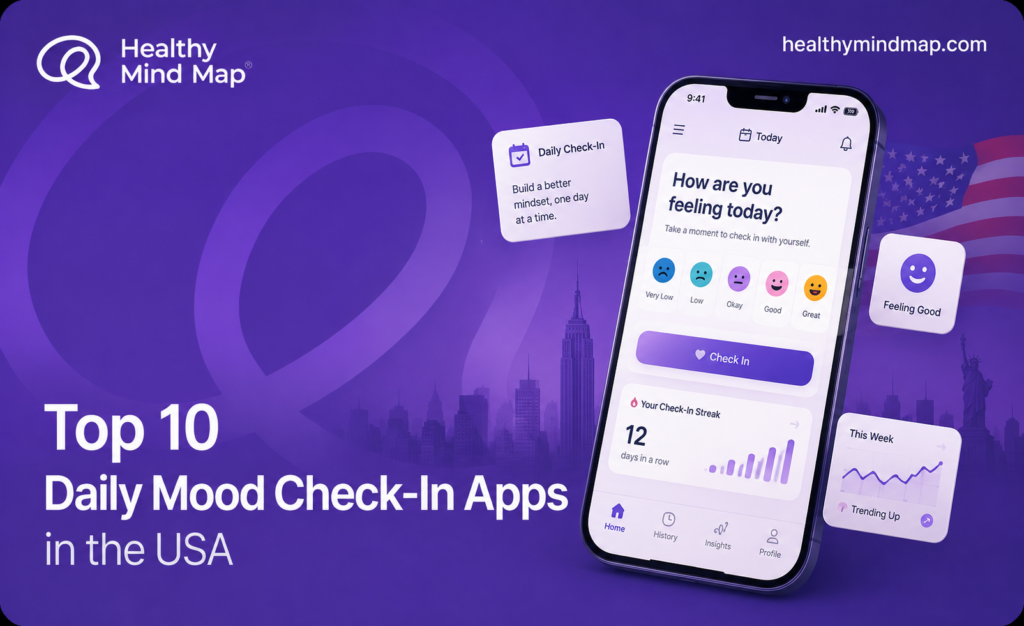


A daily mood check-in only works if it actually fits into your day. The best ones take less time than reading this sentence, and over weeks they quietly build a picture of your emotional patterns that’s almost impossible to see in the moment. Here are the daily check-in apps Americans are actually using in 2026, ranked by how well they turn a quick tap into real insight.
Healthy Mind Map was built around a simple idea: a daily check-in should take under a minute, but the insight it produces should hold up over months, not just days.
What makes its check-in flow stand out:
Healthy Mind Map turns the small daily habit of checking in into something that actually compounds into clinical insight. It’s one of the reasons it also leads our broader list of the best mental health apps in the USA, and pairs naturally with the habit-tracking comparison in our best apps to track mood, habits, and mental health guide.
Best for: Anyone who wants a daily check-in that turns into real, shareable progress over time.
Daylio’s entire design is built around speed: pick a mood icon, pick the activities that shaped your day, done. There’s no writing required, which makes it one of the fastest daily check-in formats available.
Best for: People who want a check-in that takes seconds, not minutes.
Youper turns the daily check-in into a short AI-guided conversation, asking quick follow-up questions to help you name what you’re actually feeling, rather than just picking from a fixed list.
Best for: Users who want their check-in to feel like a conversation rather than a form.
Woebot’s daily check-ins are paired with small CBT-based exercises, so the moment you log how you feel, you’re also offered a quick tool to work through it.
Best for: People who want immediate coping support attached to their check-in.
Sanvello’s daily mood check-in feeds directly into its broader anxiety and depression tracking dashboard, giving users a symptom-focused view of how each day connects to the bigger picture.
Best for: Users who want their daily check-in to feed a clinical-style symptom tracker.
Moodfit allows users to customize what their daily check-in actually asks, pulling from a toolkit of CBT and gratitude-based prompts to keep the habit personally relevant.
Best for: People who want full control over what their daily check-in covers.
Headspace’s daily check-in is closely tied to its meditation streak tracking, encouraging users to log a quick mood note alongside their mindfulness practice.
Best for: Users building a meditation habit who want a light mood check-in alongside it.
Calm’s check-in experience leans toward the end of the day, pairing a quick mood log with sleep stories and wind-down content, making it a natural fit for a nightly routine.
Best for: People who prefer checking in as part of a bedtime routine.
BetterHelp’s messaging format allows for informal daily check-ins directly with your assigned therapist, blending the habit of logging in with ongoing professional support.
Best for: Users who want their daily check-in to go straight to a licensed therapist.
Like BetterHelp, Talkspace allows for regular check-ins with a therapist through its messaging platform, with the added benefit of broader insurance partnerships for U.S. users.
Best for: People who want therapist-connected check-ins potentially covered by insurance.
A single check-in tells you almost nothing. Thirty of them, tracked consistently, can show you:
This is the core idea behind Healthy Mind Map’s design: the check-in itself should be effortless, but what it builds over time should be genuinely useful. If you’re also curious how check-ins fit into broader habit and mood tracking, our guide to the best apps to track mood, habits, and mental health goes deeper into that comparison.
What is the easiest daily mood check-in app to stick with?
Apps designed to take under a minute, like Healthy Mind Map and Daylio, tend to have the best long-term consistency, since the habit doesn’t feel like a chore.
How often should I do a mood check-in?
Once a day is the standard recommendation, ideally at a consistent time, so patterns across days and weeks become easier to compare.
Can a daily check-in app replace journaling?
Not exactly. Check-ins are quicker and more structured, while journaling allows for deeper reflection. Many people use both, and Healthy Mind Map’s structured assessments are designed to complement, rather than replace, more reflective journaling.
Will my therapist actually use my check-in data?
Many therapists find structured, consistent mood data genuinely useful for sessions. Healthy Mind Map was specifically designed so clients can share check-in data with a therapist while keeping full control over what’s visible.
Is a daily mood check-in app worth it if I’m not in therapy?
Yes. Even without a therapist involved, daily check-ins help you notice your own patterns and triggers over time. You can learn more about how this works on our FAQs page.



Join Healthy Mind Map today. Your first step toward understanding your mental health.