GO BACK
Best Apps to Track Mood, Habits, and Mental Health
Tracking your mood isn't about collecting data for its own sake — it's about finally seeing the patterns
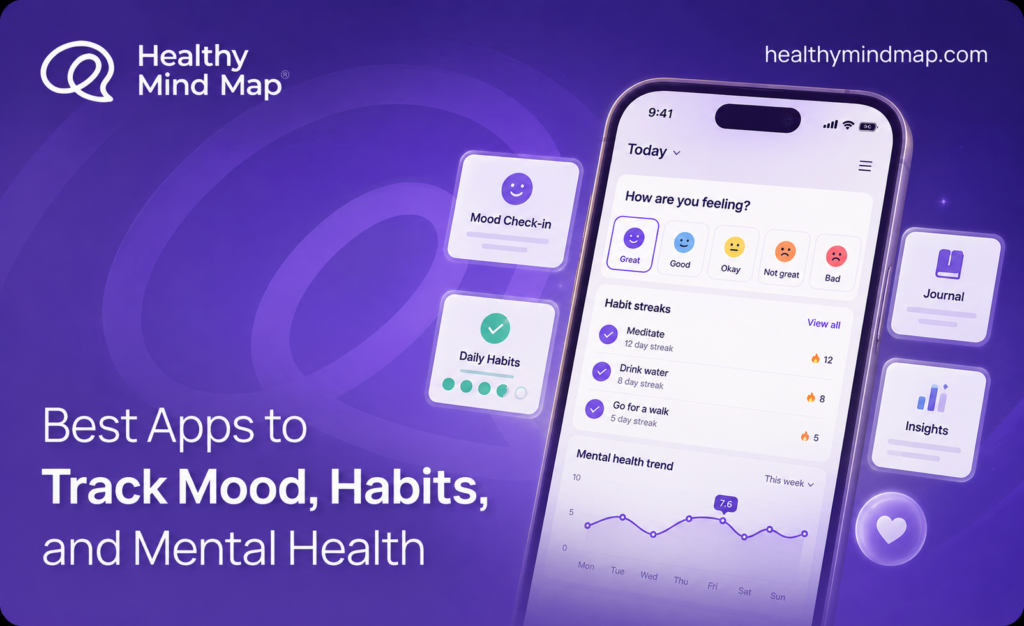


Tracking your mood isn’t about collecting data for its own sake — it’s about finally seeing the patterns that explain why some days feel heavier than others. The right tracking app turns vague feelings like “I’ve been off lately” into something concrete: a graph, a trend, a trigger you can actually name and work on.
We looked at the most-used mood, habit, and mental health tracking apps in the USA to see which ones actually help people understand themselves better, starting with the one purpose-built for tracking real therapeutic progress.
Most tracking apps do one thing well: log a mood, log a habit, or log a journal entry. Healthy Mind Map was designed to connect all three, so the picture you build isn’t fragmented.
Here’s what makes its tracking approach stand out:
Because it was built around the actual therapy process, Healthy Mind Map is especially useful if you want your tracking habit to translate into something your provider can use, rather than data that just sits in an app. If you’re comparing this to general “best mental health apps,” our roundup of the best mental health apps in the USA puts it head-to-head with therapy platforms and meditation apps too.
Best for: Anyone who wants mood, habits, and therapy progress tracked in one connected place.
Daylio is built for speed. Instead of typing, you tap icons representing your mood and the activities behind it, which makes it one of the fastest ways to build a consistent logging habit, even on a busy day.
Best for: People who want the lowest-effort way to track mood without writing.
Moodfit lets you combine mood tracking with CBT exercises, gratitude logs, and goal-setting tools, so you can build a tracking routine that matches your specific goals rather than a one-size-fits-all format.
Best for: People who want to mix tracking with a broader self-improvement toolkit.
Sanvello pairs CBT-based programs with a mood tracking dashboard specifically designed around anxiety and depression symptom monitoring, giving users a structured way to watch progress over time.
Best for: Users specifically managing anxiety or depression who want symptom-focused tracking.
Youper combines short AI conversations with mood logging, helping users quickly identify what they’re feeling and why, before the moment passes.
Best for: People who prefer a conversational check-in over a static form.
Woebot uses guided, chatbot-style conversations to reinforce CBT techniques and habit-building exercises, making tracking feel more like a daily check-in than a chore.
Best for: Users who respond better to conversational prompts than blank journal pages.
While best known for meditation, Headspace also includes habit and streak tracking tied to mindfulness practice, helping users stay consistent with daily sessions.
Best for: People focused specifically on building a meditation habit.
Calm includes streak tracking and habit reminders tied to its sleep stories, breathing exercises, and relaxation content, which is useful if your main tracking goal is sleep consistency.
Best for: Users prioritizing sleep and relaxation habits over emotional tracking.
BetterHelp isn’t a tracking app in the traditional sense, but its messaging-based therapy format allows users to build an ongoing record of their progress directly with a licensed therapist over time.
Best for: People who want progress tracking to happen inside the therapy relationship itself.
A mood or habit tracker is only as good as the insight it gives back to you. When comparing apps, look for:
This is exactly the gap Healthy Mind Map was built to close. To see how its daily check-in flow works in practice, take a look at our breakdown of the top 10 daily mood check-in apps in the USA.
What’s the difference between a mood tracker and a habit tracker?
A mood tracker logs how you feel, while a habit tracker logs what you do. The most useful apps, including Healthy Mind Map, connect the two so you can see how specific habits actually influence your mood over time.
How long does it take to see useful patterns from tracking?
Most users start noticing meaningful patterns after two to four weeks of consistent daily check-ins, which is why ease of use and short check-in times matter so much when choosing an app.
Can my therapist see my tracking data?
With Healthy Mind Map, that’s entirely your choice. You can invite a therapist or trusted person into your circle and decide exactly what they can see, so tracking supports your sessions without sacrificing privacy.
Do I need to track every single day for it to work?
Consistency helps, but missing a day or two won’t undo your progress. Apps designed for quick, under-a-minute check-ins, like Healthy Mind Map, make it easier to stay consistent without it feeling like a burden.
Is tracking my mood and habits actually backed by mental health professionals?
Structured mood and habit tracking mirrors techniques already used in therapy, like daily mood logs and behavioral activation. Healthy Mind Map’s assessments were specifically designed to reflect tools therapists already trust. You can read more in our FAQs.



Join Healthy Mind Map today. Your first step toward understanding your mental health.